
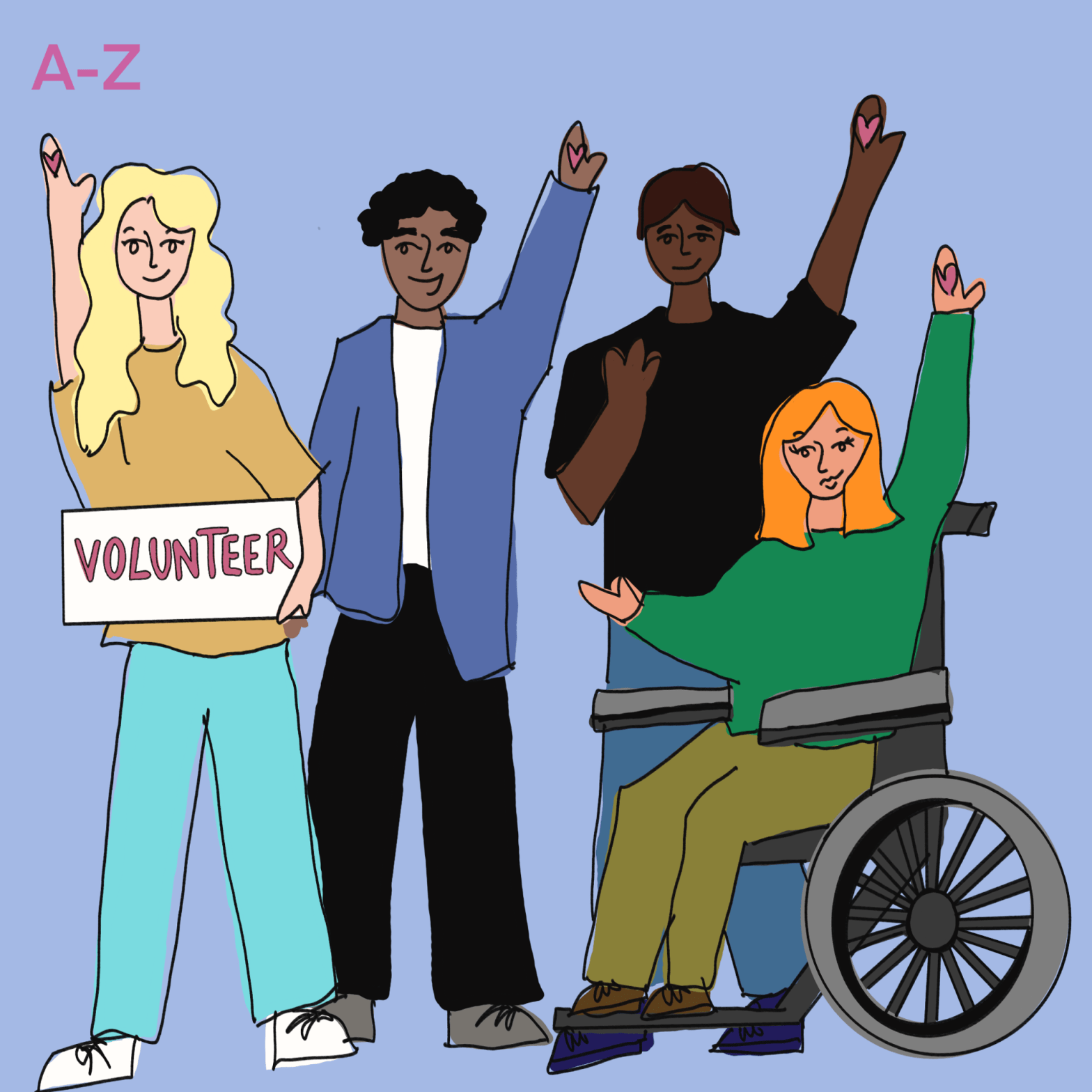
As Government policies shift towards increased devolution and place-based approaches, delivering across communities and in neighbourhoods, the role of volunteers has risen up the political agenda.
Feted during the pandemic and augmenting public services through charities and community groups, there’s nonetheless a national shortfall of volunteers at a time when there is high levels of need in our communities. This critical role has long been the stitching to our social fabric and, after years of austerity, with public services and the civic realm coming apart at the seams.
To volunteer is not the same as charity or philanthropy. Formal volunteering is defined as unpaid help given as part of groups, clubs or organisations to benefit others or the environment. These are long-term often personal commitments that involve sustained, regular attendance from the volunteers most often from within the communities they live and serve.
How and why or should government be involved in volunteering?
To volunteer is very much a private or personal decision with little or no uniform approach across the plethora of charities and community groups who provide the structure and resources for volunteering. There are tensions – and contradictions – in government policies. Extolling young people to volunteer despite a dramatic downturn in adult volunteers to guide or provide the necessary supervision. Leaning on the voluntary sector to help plug gaps in public services, yet a major challenge to government policies to Make Work Pay is that the shortage of volunteers also means fewer mentors, coaches and experienced professionals that support the wellbeing and skills in the labour market.
In tandem, the Government’s Civil Society Covenant, as a compact with the voluntary sector, includes a key focus on “how people in disadvantaged areas can be supported to volunteer and improve their social connections.”
While recognising the benefits of volunteering frequently cited as learning new skills when young people are involved and the clear benefits to those being helped by volunteers whether families or communities, when time is a precious commodity, there is a broader economic case that can be made for government to remove barriers and provide incentives for increased volunteering.
With an ageing population we are reliant on a smaller, younger workforce. From increased demands on public service to lower tax receipts families rely on each other and communities look to ways in which they can find support from within. The everyday economy is dependent on volunteering.
Yet we know that time is the main barrier to volunteering. By embedding a culture of service into the fabric of society, including businesses and volunteering leave, we will strengthen the contribution of civil society to growth. Our shared goal being better connected communities and a closer-knit society.
In recent years Citadel has worked with The Scouts, including on the campaign for paid annual volunteering leave for all employees. As Head of public affairs and communications, Katie Jackson led on that campaign for The Scouts in alliance with a range of all-age charities:
“So much of what people consider to be ‘vital services’ are actually delivered by volunteers. Volunteers save lives at sea, support people in times of emotional crisis, deliver healthcare interventions and support young people to develop essential and practical skills for their development. Many of the things in life that people take for granted would cease to exist if volunteers didn’t give up their time so willingly.
In Scouts, 450,000 children and young people take part in weekly sessions, and without volunteers these sessions would stop overnight. That means these young people might not have a safe space away from home to spend time with their friends, a trusted adult to confide in about any struggles they might be experiencing, or take part in activities that could set them on the path for their future career or improve their mental wellbeing and physical health. We have over 100,000 young people on our waiting lists. That’s 100,000 who aren’t getting to access potentially life-changing opportunities, and that’s because we can’t find enough volunteers.”
In making the case to government, Katie has focused on ways to make it easier for people to give back and for government to back a culture of volunteering: decision-makers need to think more about the role of volunteers when developing policy.
This was also a picture Katie saw whilst working in the Civil Service on youth and education policy: “Volunteers not only ease burdens on public finances but also can do things that paid members of staff just can’t, as often they are much more embedded in their communities, understand the issues and can quickly build relationships that don’t feel transactional.”
However, the last Community Life Survey showed volunteering in England at a record low. Volunteers are under increasing pressures on their time, finances and sometimes expectations placed on them by charities. Therefore Scouts joined with others to call for legislation so all workers have a right to request 35 hours of volunteering leave. This first came from young people who developed the 2024 Scouts Manifesto.
“Calls for statutory volunteering leave aren’t new, but our members were clear that they wanted more flexibility which is why our call is for hours over days. Supporting charities sustainably over the long term needs an ongoing commitment, not just short bursts of one or two days where the primary purpose of the activity was corporate team building. Our volunteers said they needed the flexibility to leave work early on a Tuesday in term time to open the Scout hut in time or plan their programme,” Katie told us.
“We are asking government to acknowledge how essential volunteering is by giving people a right to request it – rather than it just being a perk for the privileged few. We have done this by submitting evidence to bill and select committees, hosting discussions in Parliament with MPs, and asking our members to reach out and discuss this with their local decision-makers. A key part of our work has also been getting businesses on board, as this legislative change would also impact them, so it needs to be a three-way conversation between government, the voluntary sector and businesses.”
Many businesses already see the benefits of supporting their employees to take volunteering leave for skills development, employee wellbeing and brand approval. Coming down the track is the National Youth Strategy when it is launched and how volunteers sit within it. The Civil Society Covenant is also welcome recognition of the importance of the work of the charity sector, but we would like to see more on volunteering itself, and businesses need to be invited into the conversation too to share their perspectives.
Katie added: “Volunteering is a key priority for us when it comes to campaigning – to get down our waiting lists and to support our existing volunteers who are the lifeblood of our movement. We think momentum is moving in the right direction on this. We are excited to see The benefits this could unlock for society would be huge.”
Scouts has been working with Citadel and our director Jonathan Hopkins now for many years. In particular, being part of Citadel’s Youth Zone at party conferences has been a key part of the Scouts influencing calendar, which this year featured the campaign for annual volunteering leave:“Jonathan’s depth of knowledge of the youth and voluntary sectors is impressive and he’s clearly so committed to improving things for young people. His support for Scouts sharpening our policy thinking and linking us with key decision-makers has also made a real difference.”
 Citadel