2025: A Fresh Start? Rebuilding Trust in Politics

2025 is the 20th anniversary year for Citadel. We take a look at what’s in store working with clients and partners in the year ahead, and take a moment to reflect on previous years.

After a tumultuous year which saw a landslide election victory for Labour, as we start the new year in 2025, media commentators and pundits label it a fragile government with shallow roots, now deeply unpopular after just 6 months in office.

While the popularity of previous governments fell over a similar period, the ground largely held for the Conservative-led Coalition Government’s austerity cuts, returning a Conservative government in 2015. Brexit, the pandemic and a new cost of living crisis later defined the fault lines of austerity. Yet it took the personality traits of at least two controversial Prime Ministers, rather than an explicit rejection of austerity, to bring down the government of the day. Many still gather around ‘low taxes, small government’, while popular demand is for investment in public services. How to square that circle?

All eyes are on the steady-as-she-goes approach of the incumbent PM and his Chancellor to turn the ship around. There will not be a quick economic bounce-back, and the promise of the last Labour government to end the economic cycle of ‘boom and bust’ now seems hollow. Hard and harsh decisions inevitably will be made in this first year after 14 years in Opposition.

While the insurgent Reform party feasts on the media’s appetite for characters and controversy, and populists court the electorate with promises of a better tomorrow, we are well over 4 years off the next general election. But, in this media-age, buffeted by the headwinds of global politics, more hope and belief in the government is needed for people to feel the benefits from their ‘everyday economy’ – the pound in their pocket and the state of our public services. In essence, having a place to call home, their health and a job to earn.

For young people in particular, the first generation to be worse off than their parents, there’s a crying need to restore hope of a better life. This requires the restoration of trust in politicians to do as they say, seen to deliver. Yet there are competing views and no single truth. The siren call of those politicians who blame “others”, building on fear and anger, leads some to misogyny and racism and extremism. The language of the so-called culture wars and anti-woke brigade confuse and conflate the problems many face, creating easy targets and sound bite solutions.

Therefore, a resolute, steady and unremitting focus on delivery by the government maybe the only way to regain trust. To this end the Prime Minister has set out 6 milestones for this Parliament from a mission-led government.

In effect, the score card on which it wants to be judged at the next election. This does not have the flourish of political rhetoric. It can create a political vacuum for others to fill (billionaires abroad included), until the results can be seen. It’s a gamble that any government can control the economic levers in a global economy. It also risks removing the emotion from politics, to inspire through leadership and for voters to feel the difference.

For young people, it’s their economic security – the confidence they have in their future income and wellbeing. For families, it’s their ability to earn to pay everyday bills and improved health services that underpin the foundations for home, health and work. And for savings which provide for retirement, and fill the national pension schemes for investments to stimulate the economic growth necessary for an ageing population. For communities, it is the sense of belonging, safety, green spaces and amenities which bring us together – a rebuttal of a past prime minister’s claim there is no such thing as society.

Since Citadel was founded in 2005, we entered the first economic crash of 2008. As we start 2025 the country is still reeling from the economic shock of Brexit post 2016, and financial crisis of 2022. Young people today have only known austerity, the pandemic and economic downturn.

The Government has set out an agenda to reverse the tide of child poverty, a skills-shortage, limited career prospects, and Generation Rent with little prospect of owning their own homes. It promises to match high attainment at school with high expectations of young people’s wellbeing and mental health improvements. Alongside a recognition that young people are just that, ‘young’. To feel safe, have fun, curious to learn, with opportunities to socialise across communities and gain skills for life and work which will stand them in good stead.

Working with our clients and partners in 2025 there are major developments to support that government agenda in youth policies, education, skills and justice; and a focus on inclusive growth that addresses child poverty, homelessness, mental health and employment. Alongside campaigns and support for the creative industries and future skills, civil society and youth voice, and green spaces in a place-based approach with increased levels of devolution.

Eagerly anticipated is the announced of trail blazers for Young Futures – dubbed Sure Start for Teenagers – the flagship policy with youth work at its heart and services to wrap around young people including community hubs and crime prevention partnerships.

Followed closely by the brick by brick rebuilding of policies as the foundations of Sure Start for families and children, and long term investment to tackle child poverty. Including breakfast clubs and after school clubs developed in schools as safe spaces that support food and wellbeing, and enrichment activities as an essential part of young lives.

An emerging policy area supported by new research is 16-24 year olds, too old for children’s services and ill suited to all-age adult services. A critical age for personal and social development, all too often overlooked by policy makers and services outside of education.

As we look to rebuild trust in politics, it is the cohort of young people which is vital to the economy to support and ageing population, and for democratic renewal. The government’s commitment to a Youth Guarantee of employment for 18-21 year olds is one step in a long road to achieve this.

There’s more to come with the announcement of a new national youth strategy for 2025, the first in a generation. Drawing on Citadel’s 30 years of experience and in partnership with the Centre for Young Lives, our work will support youth engagement, positive activities and youth services with a long term strategy and commitment to young people.

The Party’s Just Begun?

Labour’s first 100-days in Government

The level of expectation from a Labour government with a landslide majority was never going to be met realistically in the first 100 days.

‘Careful and considered’ is what we were promised to bring stability to Government and calm the markets as a first step to economic growth. What we have got is considered policy measures, but perhaps not so careful in how they are presented.

There is time to fill the gap between expectation and delivery – a whole parliament. However, the gap is perceived as a chasm by many and how it is portrayed in the media. 

In practical terms, the government was trapped. Caught by a snap July election and a vast number of new MPs without offices or staff before the August summer recess, and ministers newly appointed then finding their feet in Whitehall departments, after the party has been out of government for 14 years.

For the Prime Minister, appointing a Cabinet and key personnel, pulling on the levers of government was always going to be a monumental challenge. This ran alongside a summit of world leaders hosted in the UK, and global crises from Gaza to Ukraine and beyond, with heightened risks to security, and headlong into the uncertainties and ramifications of the US presidential election.

While most new governments introduce a Budget to back their ideas within a matter of weeks after the election, the series of events triggered by a July election made that impossible, and the Budget is set for 30 October. 

An avaricious media has pounced on “miss-steps” in policy – or rather, in communications – and dramatised turmoil in Labour ranks.

From high profile changes in No.10, to disquiet on changes to the winter fuel allowance for pensioners, and the PM’s personal wardrobe paid by a Labour peer extrapolated gifts and hospitality which at any other time would be passed over as unremarkable. Much of which will settle down and would not be expected to make even the footnotes of history.

However, without the oxygen of hope and clear sense of purpose of what government does, rather than just say it will do, the honeymoon period for this Labour government ended abruptly, if ever it existed. 

A more muted September party conference was perhaps so many being awestruck by the size of the challenge, or simply not wanting to appear triumphalist on the back of the election landslide in the face of the everyday challenge and experience by the public at large.

Yet the fringe events held were vibrant and packed, the largest ever Labour conference, bubbling with ideas and practical ways forward, rehearsed over 14 years in opposition: we are assured it is a mission-led government. 

Which is why now so much hope and expectation is being loaded on to the October Budget. Having an iron grip is one thing. Putting in place strong foundations for growth follows on.

However, more is needed to sate the appetite of the public for change, but the Budget is a sticking plaster for one year only. The longer run up is to next year’s comprehensive spending review for a minimum 3-year commitment for investment and spending, 2026-29, which will see out this parliament. For systemic change, that will take longer still within a two-term, 10-year horizon.

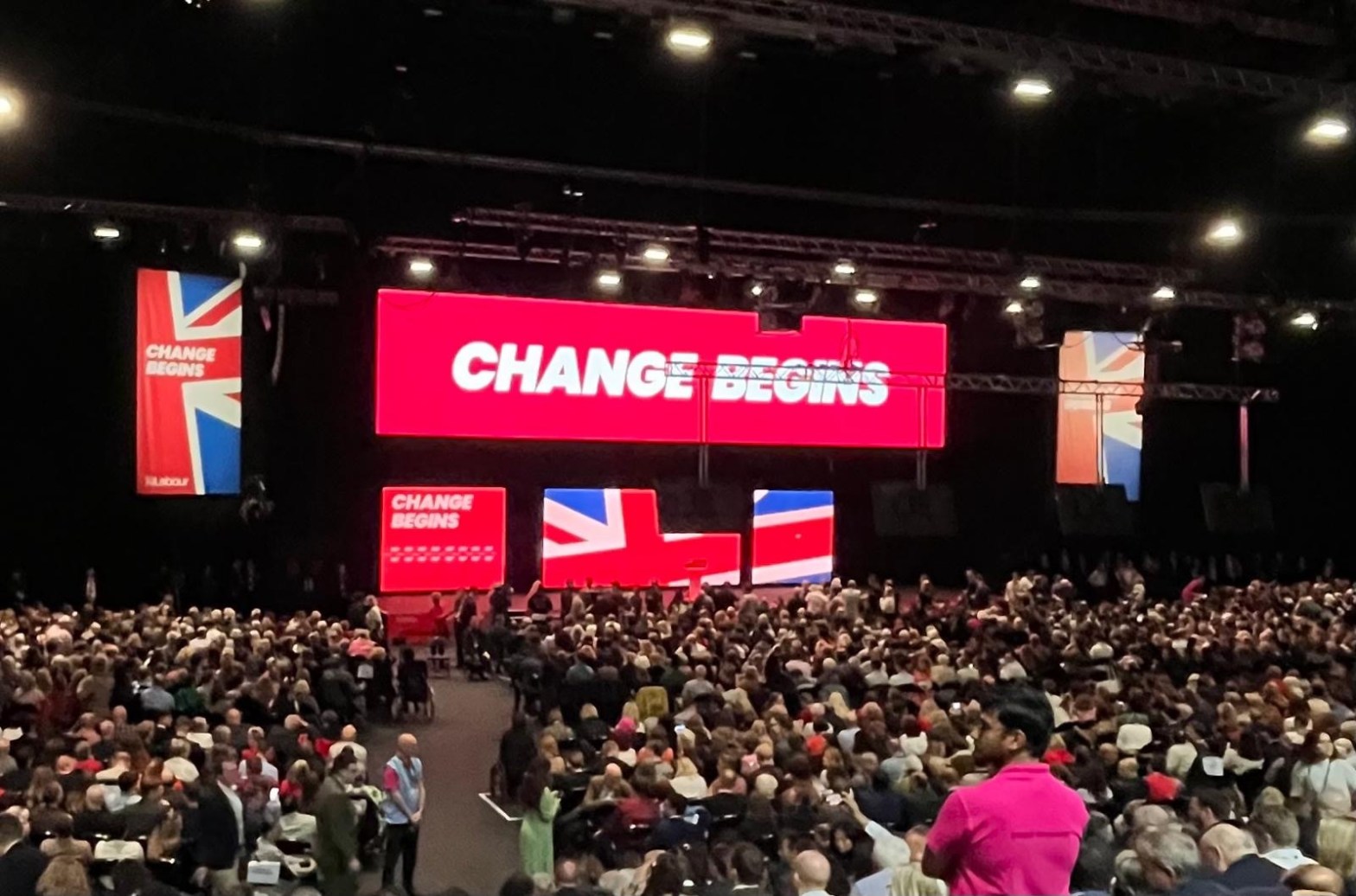
This requires stability, yes. It also needs leadership and recognition that “change begins”, which was Labour’s party conference theme. This can only be secured with patience – ‘careful and considered’ policy changes.

However, all is defined in the short term by further spending cuts at a time when there is little left to cut across public services and local government. 

The first steps are being taken with legislation planned for employment rights and children’s wellbeing, also putting in place GB Energy towards a green economy for example. We look ahead to greater devolution and the role of mayors and combined authorities, in the design and delivery of public services, closer to the communities they serve.

Housing, Health and Employment – for home, wellbeing and income – are the bedrock of other policy proposals. There will be a trade-off and compromise which many will understand. In a political narrative, breakfast clubs in schools is a counterbalance to the ending of universal winter fuel allowance for pensioners.

As we adjust to a change in government and presentation, it is right to pursue evidence-based policies especially at a time of spending constraints, but this cannot be risk-free.

There is a need for bold policies that will deliver a real return which people can see and feel and benefit from, here and now. What is missing is the belief and hope that change will really happen and an impatience with government, creating a void where a large number disengage from politics feeling left behind and disenfranchised, or turn to the rhetoric of ‘easy answers’ and populism which seeks to divide and marginalise great swathes of our communities. 

Changing The Conversation: talking politics with young people

Anyone under 20 years old only knows austerity, the pandemic and cost of living crisis. They are worse off than their previous generation, and don’t have the same expectations as the generation before. However, they want the same things from life: a home, their health, a good job.

As teenagers young people may not think in the same terms, and most don’t have the vote, but they have parents and grandparents who want those things for them.

Yet ask young people – including those from disadvantaged backgrounds (especially them) – what it takes to get on in life and they will tell you it’s down to hard work and a good education. They don’t shirk (they aren’t ‘snowflakes’).  Rather the landscape is very different. 

A job-for-life no longer exists. A single career path can be rare. Multiple jobs and changing roles are increasingly the norm. For the vast majority it’s not possible to save for a mortgage, now living at home longer if they can or with high rents that eat into their lower paid jobs.

The loss of places to go and things to do and services that work for them has created a pressure cooker of mental and physical health concerns.  

Setting policy and delivering services through the lens of older people is to fail us all. For this next generation, they are the workforce we need to support an ageing population; they are the new parents starting a family and setting up home; their health is vital to reduce pressures on the NHS; their happiness is perhaps the most important across our communities.

Young people care deeply about their families, communities and the environment.

To give hope – and restore faith in our democracy – we must strive for a decent quality of life now and in the future.

Young people need to be part of the conversation, listened to on from their experiences, engaged on their terms. 

*Citadel hosts charity-partners at the main party conferences, to create space with young people and engage on issues with senior politicians and services on the intergenerational challenges and future opportunities. #YouthZone #SkillsHub

On the road: Party Conference season

What can we expect to hear from Ministers at next week’s Labour Party annual conference in Liverpool? Which direction will the Conservative Party take in its leadership election, shortlisted to four candidates on stage in Birmingham?

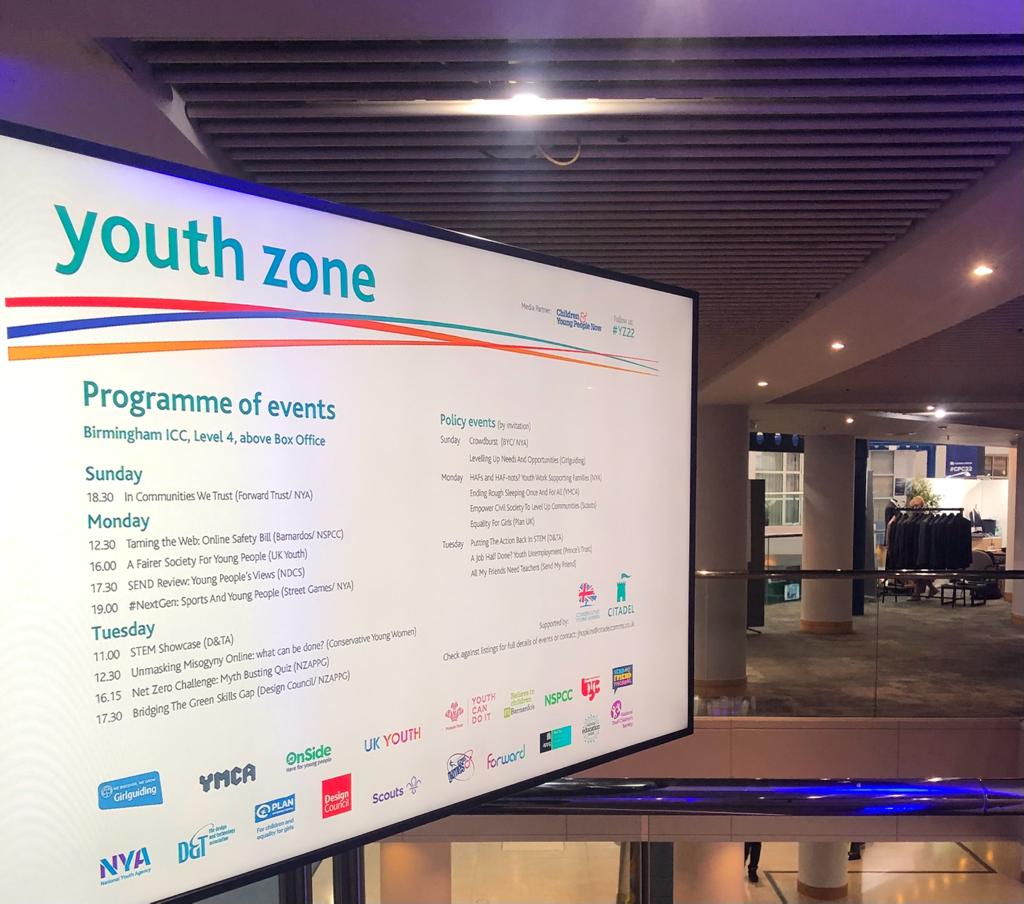
As we enter into our fifteenth party conference season, it is the first under a Labour government, hosting the Youth Zone programme of events now including a Skills Hub for the second year.

This creates a dedicated space at the parties of Government and Official Opposition, to engage with senior politicians and party representatives on their plans and ambitions across children, young people and families, education and employment.

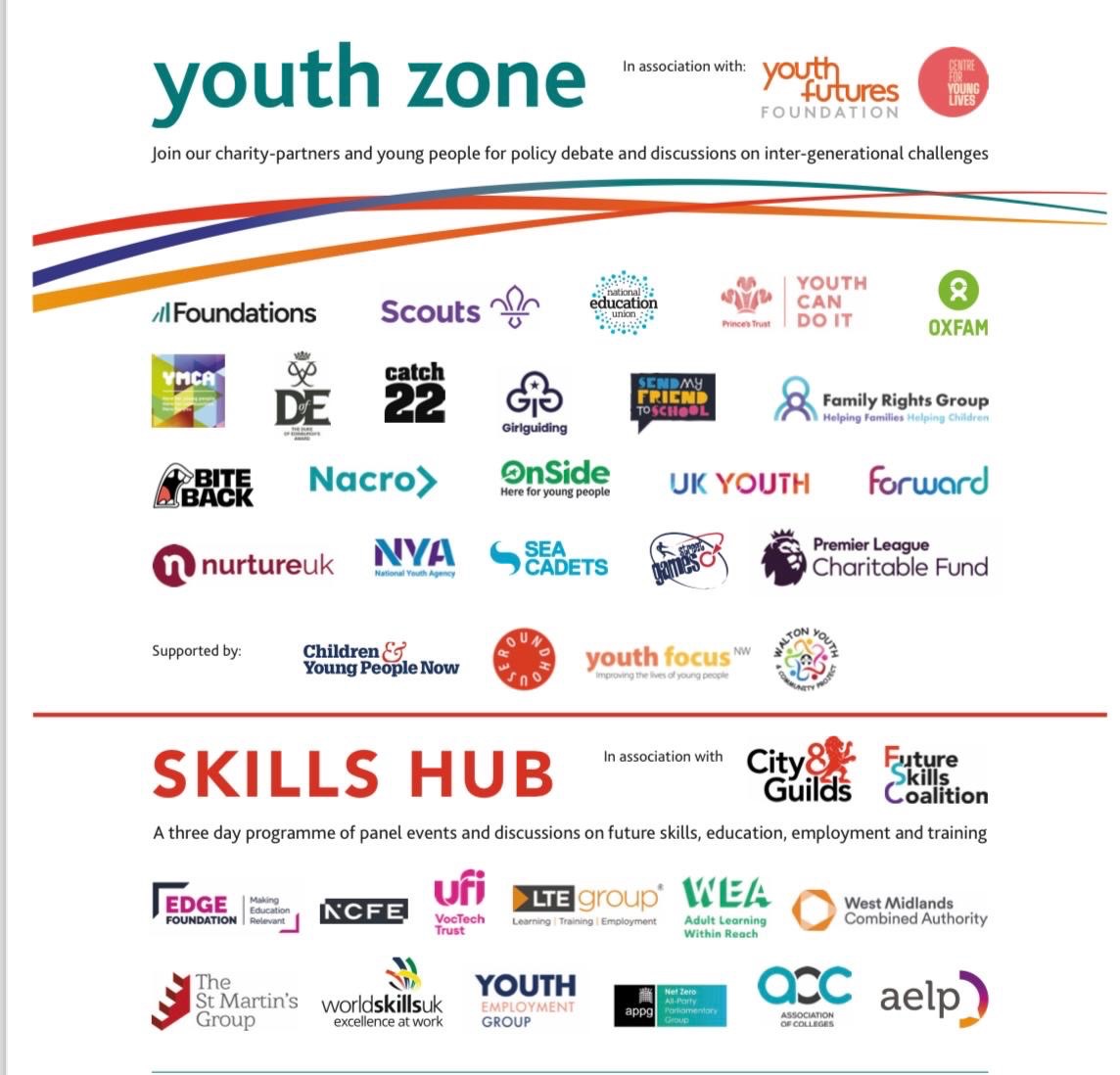
We tackle intergenerational issues from social care to climate change, the economy and health. Charity partners, young people and politicians come together, in a full programme run with over 40 not for profit organisations. 

We kick off in Liverpool for what is promised to be the largest-ever Labour conference, pushing the agenda with some 45 events hosted in just 3 days, held in the main conference centre.

As well as extra features of a Youth Bus on site used as our podcast/recording studio from conference, and a Monday night bonanza at the Beatles Story museum and celebration with special guests with Centre for Young Lives and Roundhouse followed by a Future Skills Coalition reception.

Full detail of all events can be found in the party’s conference handbook and App for delegates and visitors (conference passes are required).  

Look out on social media and return to our website to keep track of what is being said and reports from the party conferences. 

On valentine’s day: wooed by the parties in an election year

Romance is in the air on Valentine’s Day, as new relationships are formed and vows are renewed. We take a look at the top-tips for loving, healthy relationships as the political parties seek to woo voters in an election year.

For both main parties, not trusting what they say as a voter or even as a party member, has thrown the voting intentions of many into doubt. We are promised stability and change in equal measure. Yet many are looking at restored hope and aspiration, without that will they bother to turn out on election day?

1. TALK ABOUT HOW THINGS ARE GOING 

Are you thinking of which party to vote for in the up-coming elections, or questioning your loyalties to the party you belong to?  Communication is essential for all relationships including non-monogamous floating voters and casual relationships of first-time voters. You both need to know where you stand.

2. THERE’S NO ‘RIGHT’ WAY

There is no blueprint or ‘ideal’ relationship. Be honest and open about your expectations and how you see things progressing, before you get to the election and down the aisle of the polling stations. Once elected, check back in to make sure you’re both happy with where you are. 

3 DON’T FORGET TO PUT YOURSELF FIRST 

You shouldn’t put someone else’s needs before your own to the point where your needs aren’t being met. If someone asks too much of you, even in a relationship, it’s fair to say no and explain why. Every political relationship has their boundaries of what you do and don’t want to do for each other, you just need to figure out where the line is.  

4 HEALTHY RELATIONSHIPS 

At our heart is the deep desire for a healthy relationship between the parties and voters, and of government with young people. We are desperately seeking a democratic renewal with vows to stay together and not be taken for granted or ignored. 

We take heart from our work in support of the British Youth Council and others, from the Votes At 16 campaign.

We have taken inspiration from work with Brook and their advice on personal relationships.

Doubling-up to improve young lives

A new think tank has launched this month, the Centre for Young Lives, founded by former Children’s Commissioner Anne Longfield CBE.

She has teamed up with Citadel Director Jonathan Hopkins who joins the Centre as an Associate to help drive forward the political agenda for young people and families in an election year. 

The challenges are great as the Centre addresses systemic issues like poverty, mental health, education and regional disparities.

The Centre’s focus spans from early intervention to empowering and advocating for vulnerable young people, in the design of policies and modelling practice. 

Jonathan said: 

“As the political parties prepare their manifestos and pledges for the next 5 years, we will see promises of a few ‘quick fixes’ alongside long-term solutions, not all of which will survive the electoral cycle and spending rounds.” 

“Rather, the appetite for reform is based on what is known to work with young people, shaped by families across communities, informed by frontline practitioners and evidenced by data. This will help deliver now for young people, with long-lasting impact in their lives.”

Anne Longfield said:

“We need a new social contract with our vulnerable children and families. Without a plan and a properly evidence-base to meet their needs, we have a system that simply manages failure and waits until there’s a crisis before intervening.”

*The first report from the Centre for Young Live was published at its launch, on autism and neurodivergence as part of a ‘Child of the North’ series of research reports led by the N8 Research Partnership of Northern universities and others (2 February 2024).

A well-trodden road

The King’s Speech maps the path for the year ahead, putting down political markers and setting out the legislative timetable. However there will be a few twists and turns, and perhaps a fork in the road, as we head towards the next general election.

The Speech sets the tone and tenor of the political discourse – whether in a debate to move policy forward, or in playing to the base for political gain.

For the Opposition parties – and Labour in particular – how they respond will demonstrate how bold or cautious, positive or reactive they are as a potential government.

At a time when each party can see advantage in deterring the electorate from voting for the other side, and the potential of a low election turn-out, the public at large are looking for what might inspire them and provide ‘strong leadership’.

A steady as you go, hold your nerve and something will turn up approach to an election risks more than voter apathy. Internal party tensions (in each party) could cause an implosion with other parties ready to fill the gap.

Whether that’s a loophole for a returned Conservative government, a Labour resurgence in Scotland, a renewal of Liberal Democrat’s as power brokers, or gains by Greens or the Reform Party recalibrating domestic politics.

Electorally, despite the opinion polls, a winning hand can still be played by the Conservative Party. The PM can choose a time to call the election, can set an agenda and go to the country on the back of a tax-cutting budget and hint of an economic upturn.

The electoral maths make a Labour win a mountain to climb, in any circumstance. The challenge of an electoral pact with other opposition parties could be seen to concede political ground, rather than viewed as ‘strong leadership’.

Yet the underlying political fatigue and public sense of “it’s time for a change” lays down the gauntlet. Whether that’s played out on a national stage in a May general election, or rehearsed first in the regional and local elections with the government going to the country in October or serving its full term to the end of the year. We wait to see.

What’s clear from today’s King’s Speech is it is not so much about defining the dividing lines between the parties, though traps have been set on crime and sentencing and so-called anti green policies, daring Labour to oppose. Rather it is to shore up the core vote, but it falls well short of a narrative or vision.

There’s little to appeal to young people (written off electorally?) or a growing consensus around education reform and a mental health crisis. Instead there is a retread of policies not all of which require new legislation.

As we look ahead, the King’s Speech threatens a long and winding road of attrition. That in itself is a challenge to good government and responsible opposition.

How the parties fared over conference season

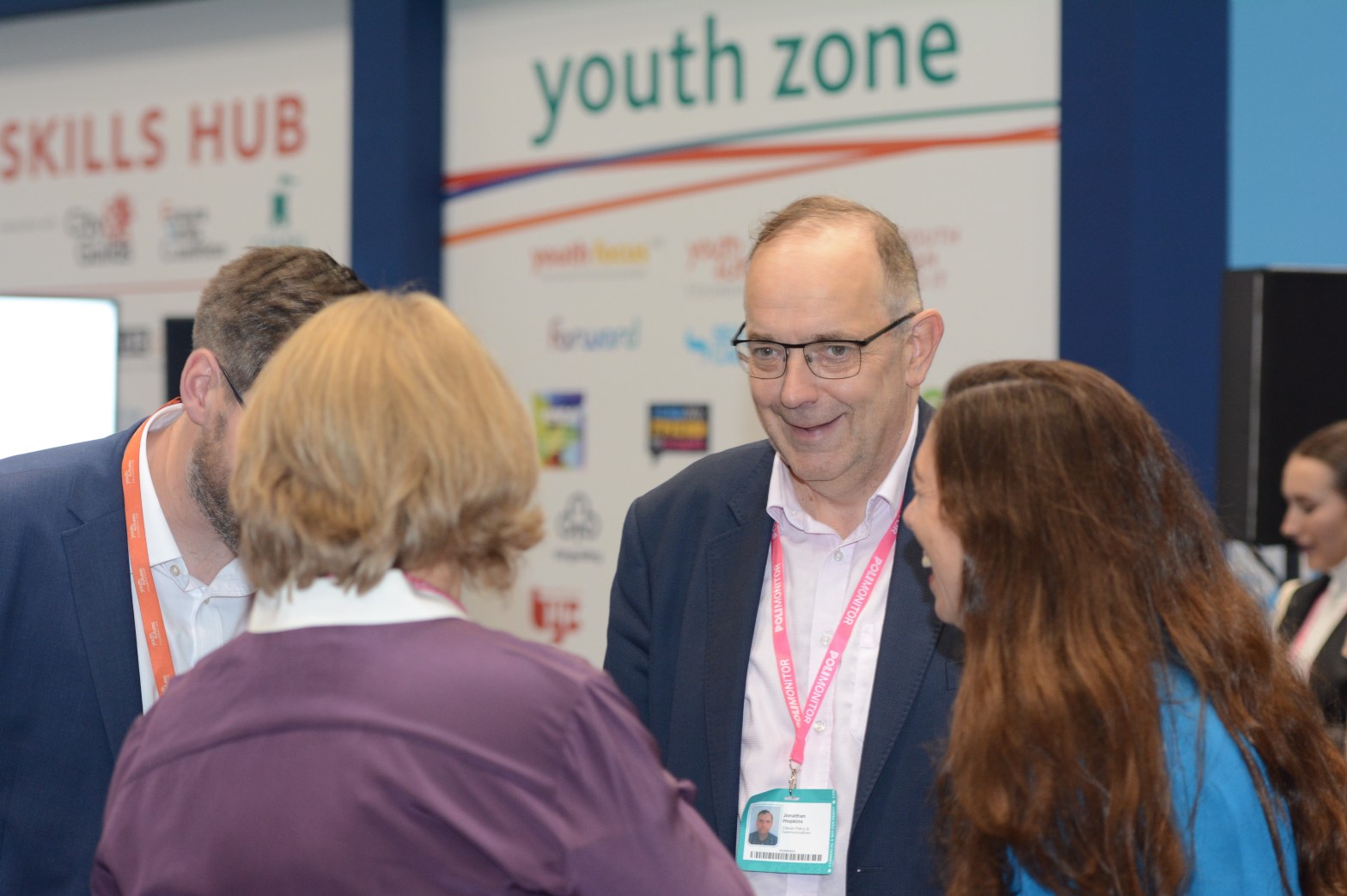
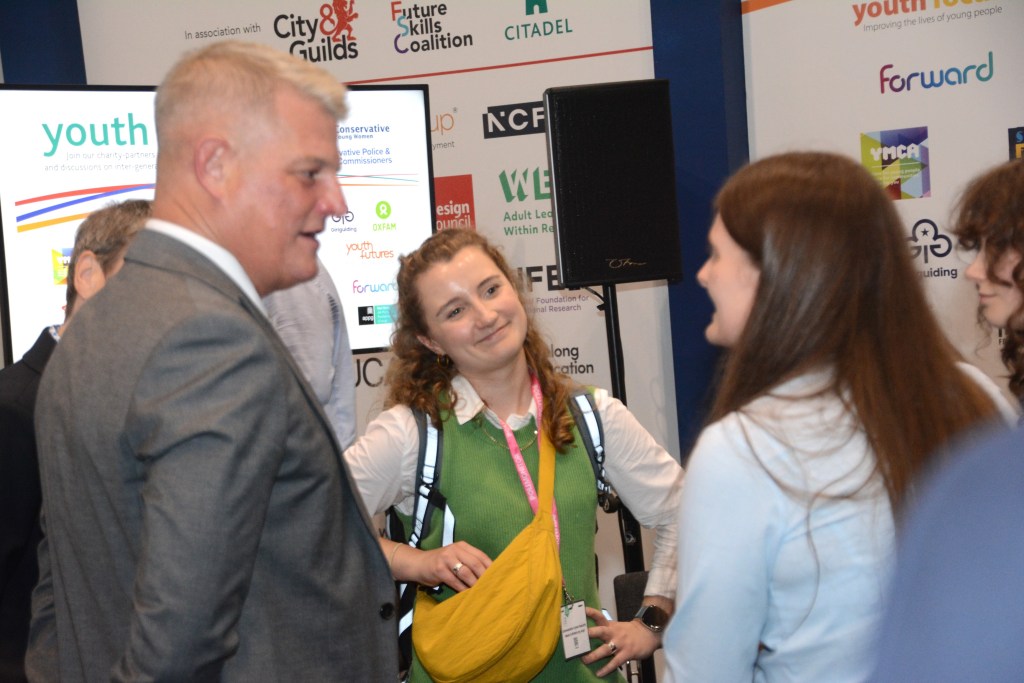
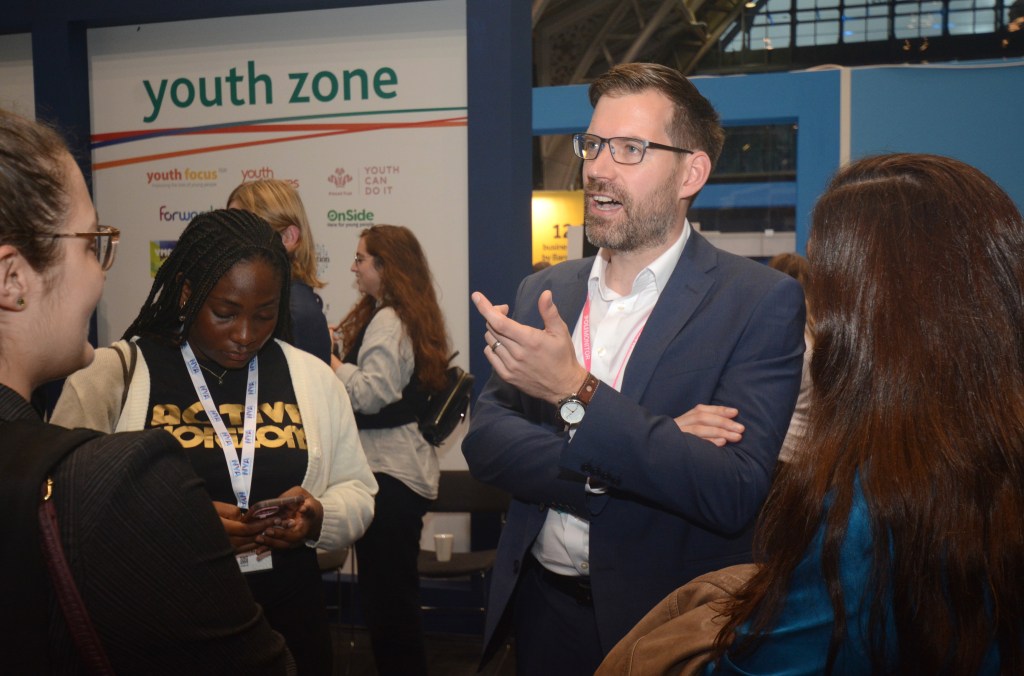
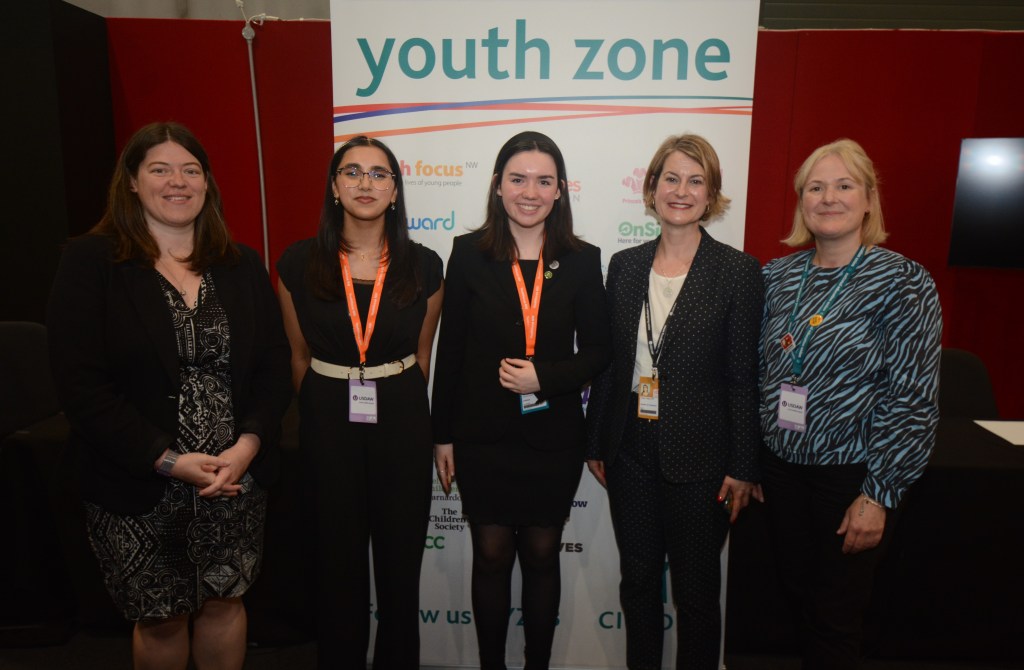
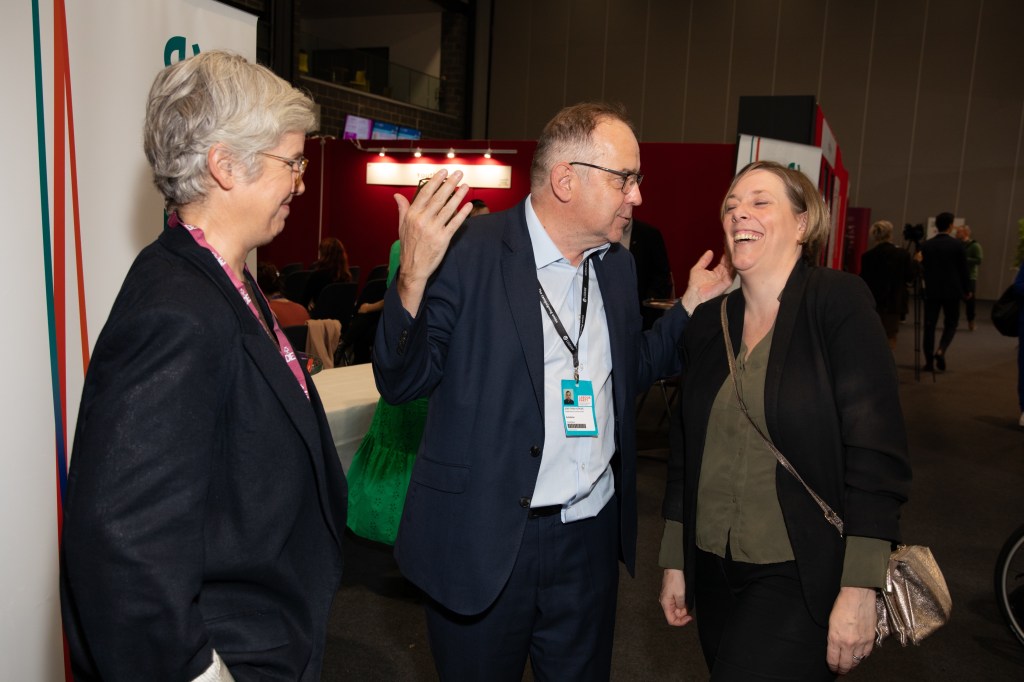
The #YouthZone rolled into town in its 13th year – still growing and learning, but now in our teens! – taking in Conservative Party conference in Manchester before heading over to Labour Party conference in Liverpool, as the parties of UK Government and Official Opposition.

Bringing together youth charities and young people with senior politicians and party representatives.

Credit: Bob Fallon Photography

This year accompanied by our first ever #SkillsHub of education and training providers and employers.

Each conference hosting a full programme of fringe events in a purpose-built theatre venue within the exhibition halls, and meeting rooms close by.

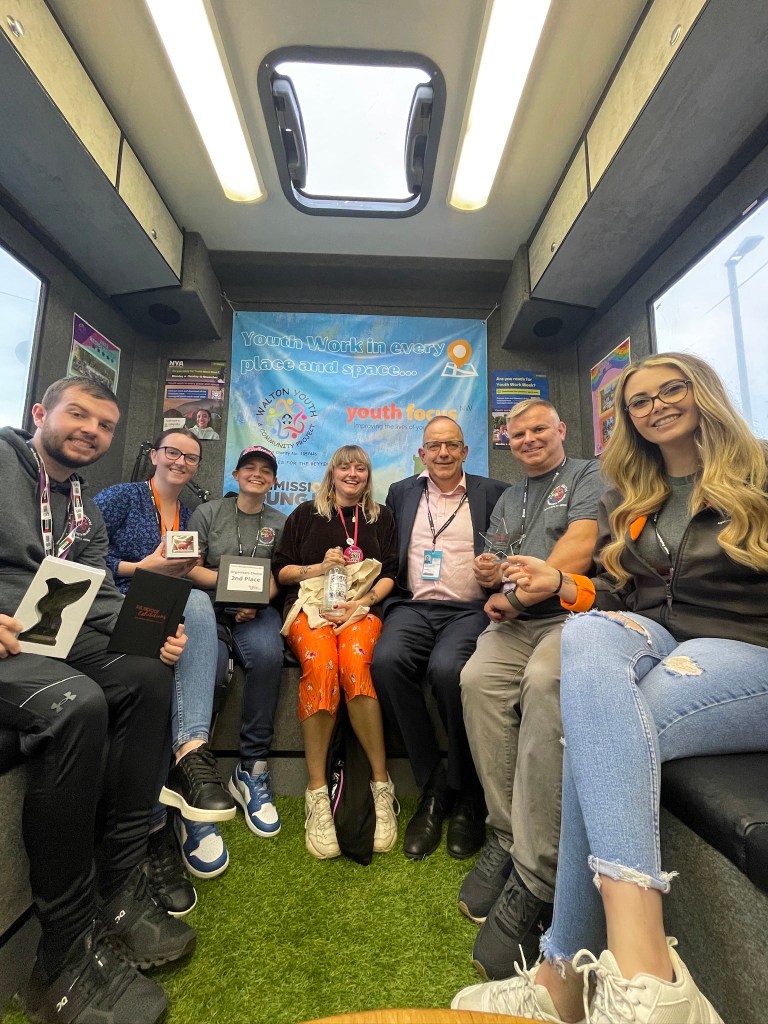
We covered an astonishing 80+ events in just 5-days. The cherry on the top of the cake was our podcast studio ‘on the bus’ as part of the Labour exhibition run by the magnificent @WaltonYP

Credit: Walton Youth and Community Project

With some 100 young people, 50 youth sector and 50 skills sector leaders taking part at the heart of each conference, no other sectors had such a profile on a shared platform. Ministers and Shadow Ministers embraced the programme, well supported across the board.

We’d had a raft of government initiatives and funding announced in advance of the conferences, for youth policies under the National Youth Guarantee.

And new reforms of education and skills announced in Manchester, which we are less sure of, awaiting more details.

Credit: Bob Fallon Photography

In turn Labour announced its plans for a Young Futures programme of investment in community hubs and for mental health.

Credit: Bob Fallon Photography

That is a culmination of work with the Commission On Young Lives we are very proud to be part of.

Overall, we have no favourites – except for the Walton youth bus! – but there are a few stand out moments across the two weeks:

  • A line up of Ministers, council leaders, party representatives and senior MPs to welcome us to Conservative conference. Co-hosted by young people from Manchester and the north west.
  • The breadth and depth of issues and events as part of the #SkillsHub.
  • Sports & Youth Minister being interviewed ‘in the hot seat’ by TV presenter Adrian Chiles with Street Games.
  • The drop-in and selfie with the Prime Minister and young people from 5 children’s charities.
  • The extraordinary talent in young people led sessions and #YouthVoice (special mention goes to Youth Focus NW and British Youth Council).
  • The fun and games of interactive and energetic sessions including Sea Cadets, Football Beyond Borders and Net Zero APPG.
  • Ministers fully engaged at Conservatives and new Shadow Ministers so supportive of our events at Labour.
  • School students visiting with Oxfam, Send My Friend and Design & Technology Assn. going toe-to-toe with MPs.
  • A series of ‘hot seat’ interviews and podcasts alongside the Commission On Young Lives, and others hosted in the #SkillsHub.
  • Friendships new and renewed, topping the list with Youth Focus NW, Walton youth & community project, and City & Guilds.
Credit: Bob Fallon Photography

Finally the unsung heroes of conference staff from each party and conference venues.

Truly brilliant from Anne, Dean, Katie and colleagues at Labour, Tkay and team at Conservatives.

We thank you, and will see you next year!

Credit: Gus Campbell Photography

A Bumper Year at the Party Conferences

It may yet be a year and a half away, but the anticipation of a 2024 general election will make this autumn’s party conferences the biggest for a decade.  

If the  current Parliament goes its full term, to the end of 2024, we could squeeze in another conference season. But with all parties put on election-footing, policies and manifestos will be shaped now. Whether an early election is triggered or as the foundations are laid for a long march to the polls over the full term.  And let’s not forget the May 2024 elections for regional mayors and police & crime commissioners, at a time of greater devolution of power and responsibilities. 

As a result, expect 2023 to be a bumper year of civic, corporate and voluntary organisations taking part in October’s party conferences. Hotel rooms and fringe venues closest to the conference centres are fully booked already.  With the Conservatives in Manchester vying for top spot with Labour in Liverpool, separated by a few days, many exhibitors and campaigners moving straight from one to the other.  The mood and vibrancy of each conference judged closely for signs of confidence and any change of political direction. 

The largest shared platform at party conferences in recent years has been the Youth Zone, with a full programme of events led by charity-partners with young people. Each tackling issues of the day and longer term inter-generational challenges. We return in our 14th conference season as the biggest ever. And this year we have added a dedicated Skills Hub, doubling the number of partners and events; with a focus on education, training and future skills,  from schools to adult education and employment.

The Youth Zone and Skills Hub programmes will be announced shortly. Cross-cutting themes include Climate Change and the green economy, ‘education, education, education’ and community renewal. We will feature some of the partners, events and campaigns in the coming weeks and run up to the conferences. 

What’s clear is that the party conferences will be used as a springboard for a new government of whichever political persuasion. Manifesto pledges, headline policy speeches and priorities for government discussed in detail: the 2023 party conferences will help frame the political agenda for the next few years.