
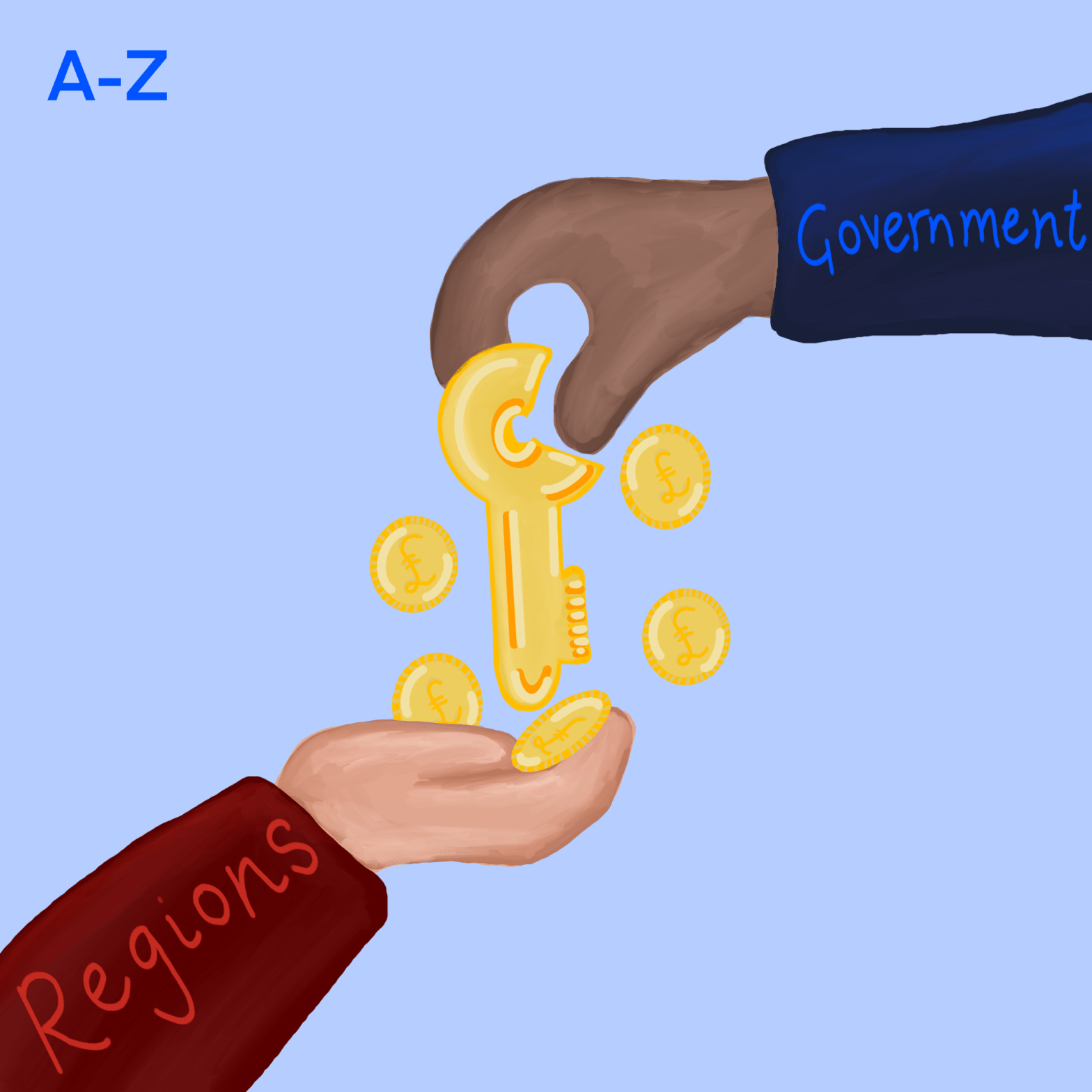
What happens when you devolve powers to the English regions? More Mayors with increased responsibilities but less funding pushes problems away from Westminster and Whitehall. Yet a Government cannot afford to ‘let go’. It survives if people are better off, or at least feel better off, and are more confident about their futures. That is the sum of all parts of the country.
Therefore devolved powers must have clear lines of accountability and be properly resourced. While a Mayor can be held accountable by the electorate in their region, what is their accountability to Government and on the policies it was elected for the good of the nation as a whole?
This works both-ways. The Government is accountable to the regions’ electorate too, but often is seen as too distant and past experience has shown a willingness to write-off some regions (or indeed some UK devolved nations) in pursuit of votes or growth in other parts. Think the North-South divide.
When all the power is held centrally, too many decisions are made remotely from the communities they are meant to serve. Ministers set policies and budgets, Whitehall details policies and funding, drawing on data and focus groups and on occasion national consultations. Regional interests can be pursued but the national interest is overriding.
Westminster provides some checks and balances, determining legislation and scrutiny and public debate including MPs’ local and regional interests; but there’s little in the way of accountability between the regions. What’s established and works in some regions can be replicated in other areas or look very different: does difference matter? In some parts of the country there is a more clearly defined pride in their regional identity. This belies a patchwork of local identities and diverse communities within a region. Where does devolution stop?
Mayors are recognised as political champions ‘with clout’ to make things happen and an air of independence, not just as party stalwarts holding office and representing Government. We look to Mayors to empower localism in place based and neighbourhood-level approaches.
To that end the English Devolution and Community Empowerment Bill was published in July and is currently before Parliament. This lays claim that “deepening devolution across the country is what delivers the change to the day-to-day services and opportunities on every region’s doorstep.”
Prescriptive measures and narrow programmes dictated top-down from Government are counterproductive, a sugar-rush of funding at best. Rather it is the role of government to set clear outcomes and expectations for the population at large, within a framework of support and resources for public services where local areas can design, deliver and sustain services contextualised to their needs.
Regional mayors have convening powers at an appropriate scale for business and investment and population sizes. They oversee geographic areas and cultures that, if not always in harmony, are largely well established and connected. There’s often a shared history and everyday experiences between areas within a region over and above the nation state.
People want to see Mayors champion their cause and get things done often in spite of, if not supported by, the government of the day. To see the difference, closer to home, and feel the difference for themselves their families and neighbours.
Citadel is an associate of the Devo Agency, a network of specialists across the country to support UK growth and increase social mobility through the power of good devolution.

