Collision Theatre: What to expect at the Edinburgh Fringe

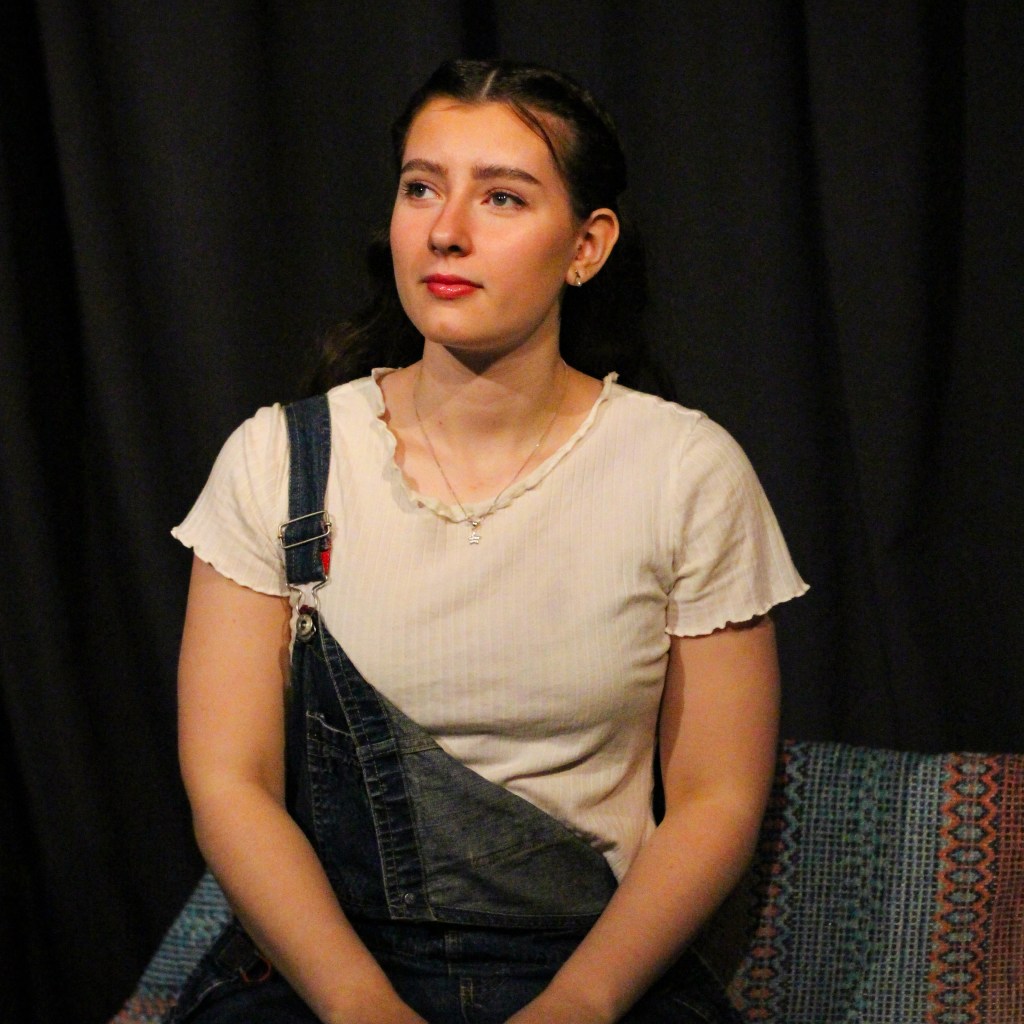
Collision Theatre are a Manchester based theatre group who, with the help of Citadel’s sponsorship, have been performing 2 new plays at this year’s Edinburgh Fringe Festival.

As their first show comes to an end at the Edinburgh Fringe Festival, we caught up with members of the cast to reflect on their experience of this year’s festival, and their handover with handy tips for the cast of the second show.

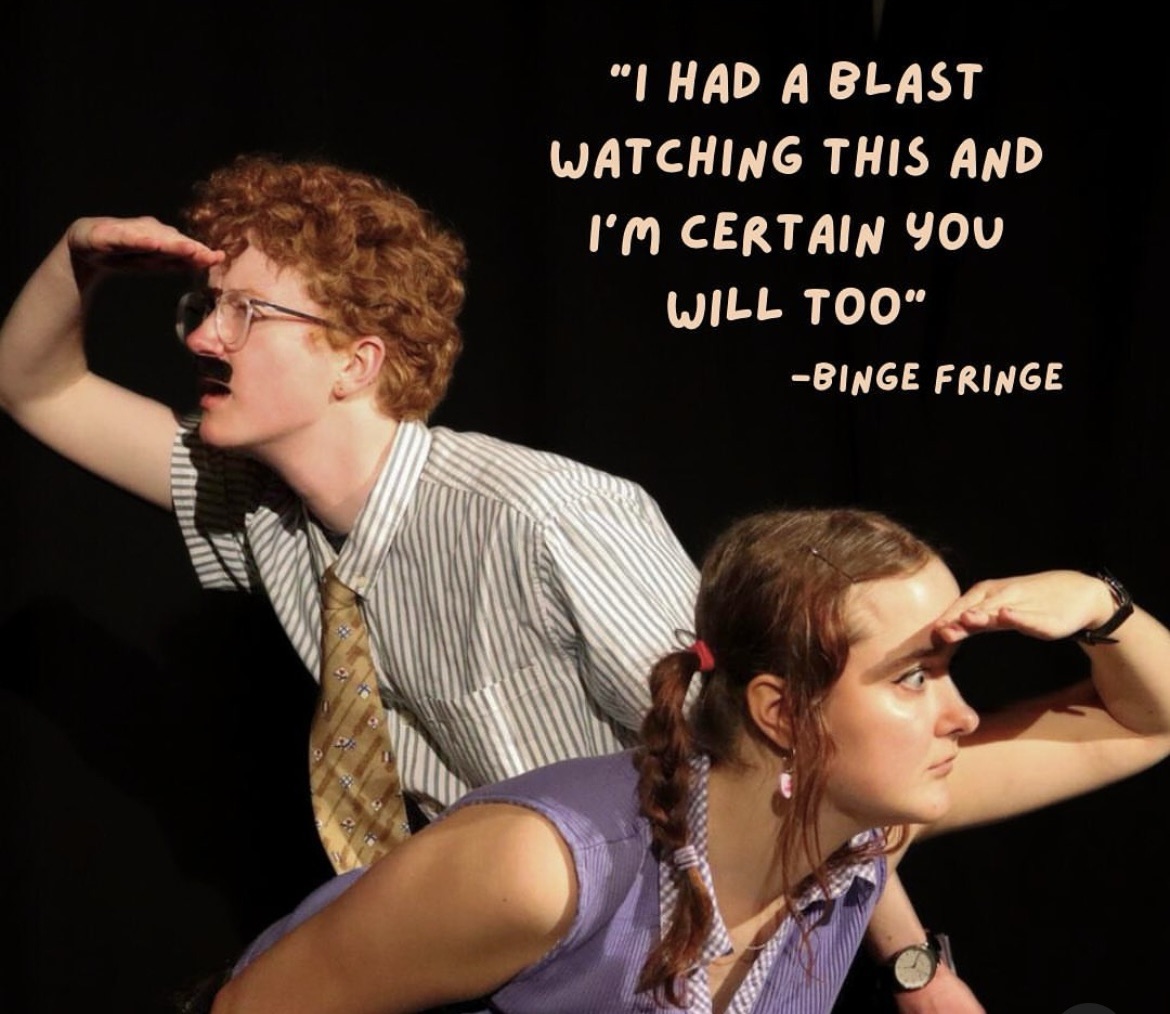
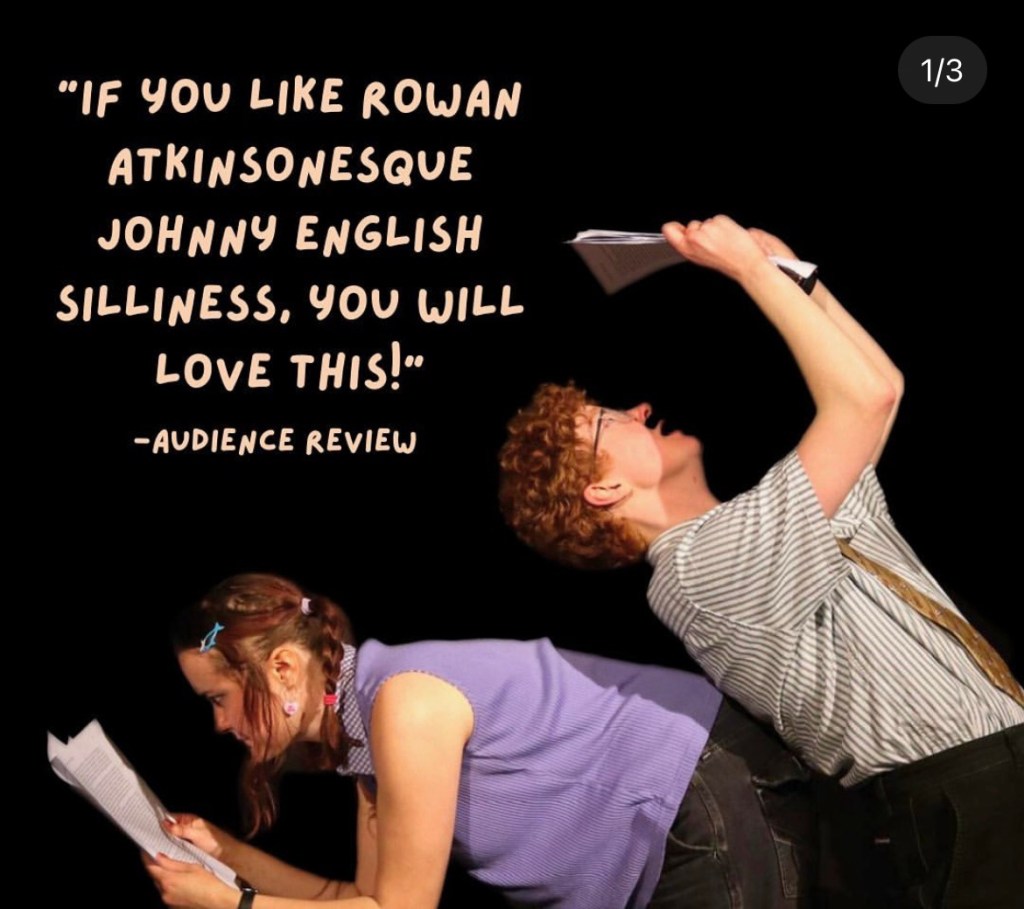
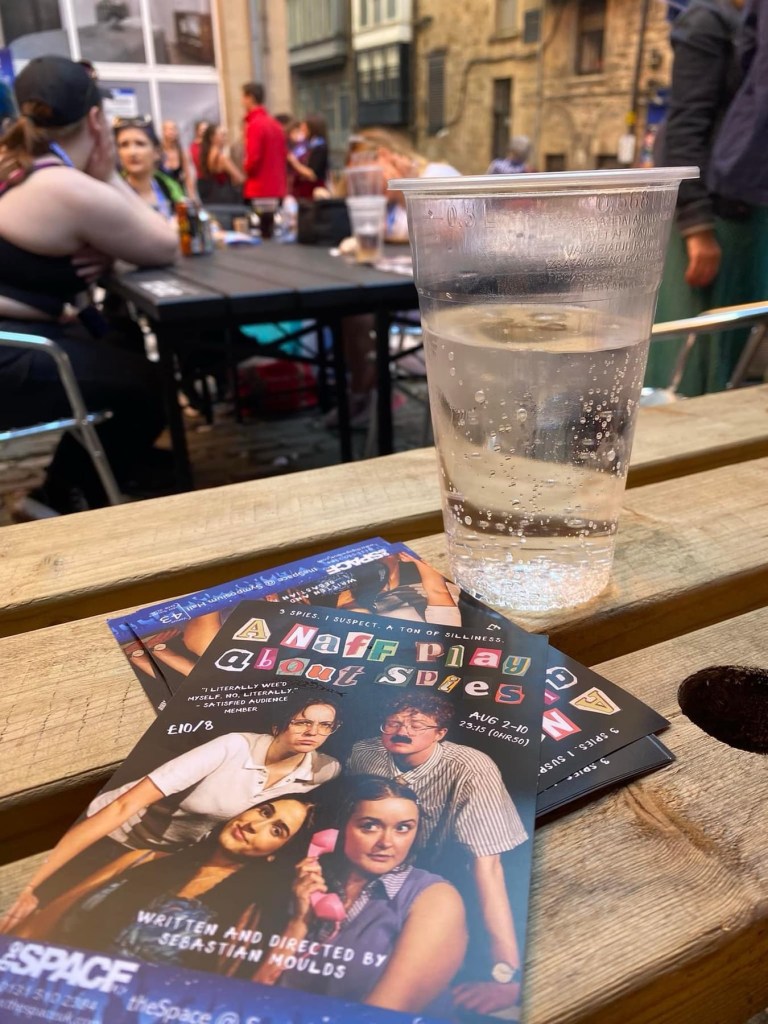
‘A Naff Play About Spies’, written and directed by Sebastian Moulds ran 2-10 August. Performing at 23.15 each night can be an unforgiving timeslot , but in the words of one fringe reviewer: “this cast kept the energy high throughout”. For another, “the audience are left with no option but to laugh, gasp and maybe even cry”.

Cry? Brace yourself for their second show ‘Letters From My Dad (Who Is Dead)’ directed by Michael Bryceson: 12-18 August, 11.00 at C Venues Aquila Studio, Edinburgh.

So, what are those top tips for performing at the Fringe? – we asked the cast.

Street-wise

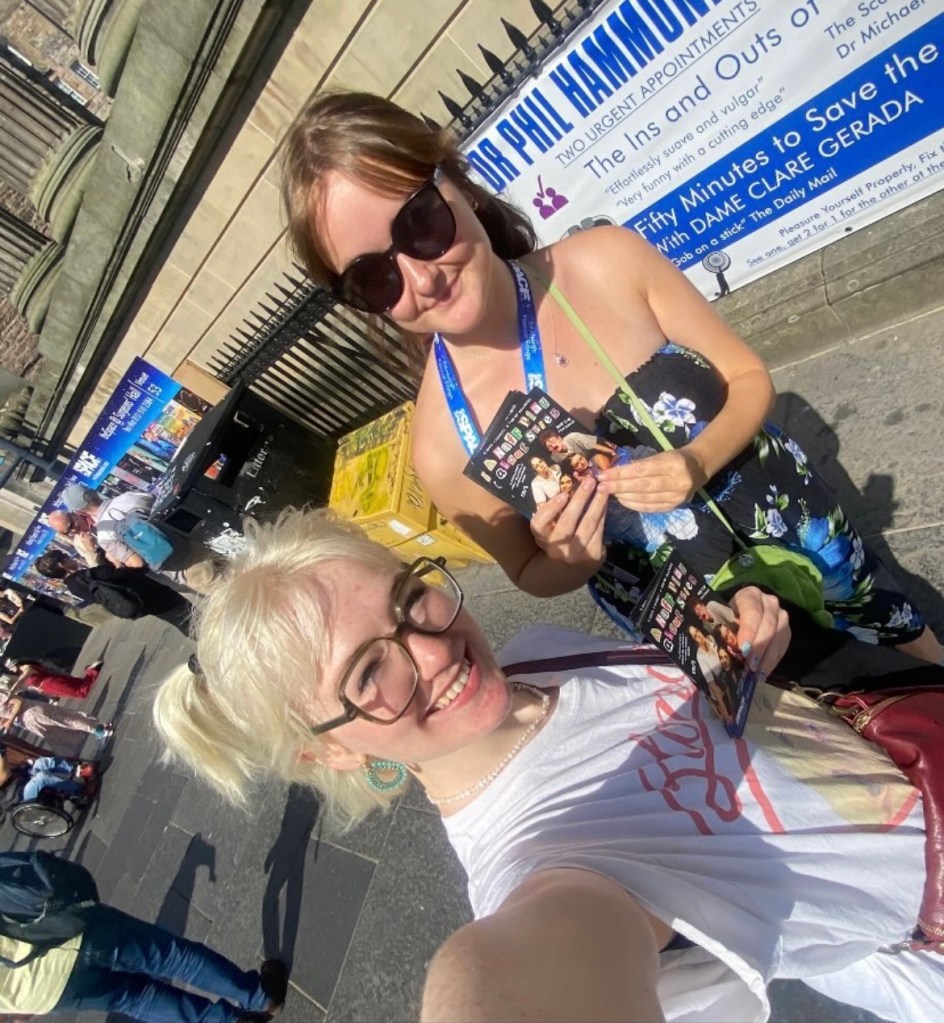
The cast teams up into two’s or three’s and flyer within a 2 hour slot each day, a roster that allows us to make the most out of our 24 hours without burning out. And it’s not easy to approach strangers in the street, even for confident character performers! Each has their own technique.

“Personally, my favourite place to flyer is at the tail end or halfway up The Royal Mile, and my attention-grabbing line is ‘Ever fancied joining MI5?’ It’s such an intimidating task, but it’s a brilliant way to tackle any rejection based fears head on, as you have some genuinely lovely interactions and prove to yourself that the world won’t crumble if someone doesn’t want your friendly bit of paper.”

Some of the cast out flyering on the Royal Mile (Credit: Collision Theatre)

Fear Of Missing Out

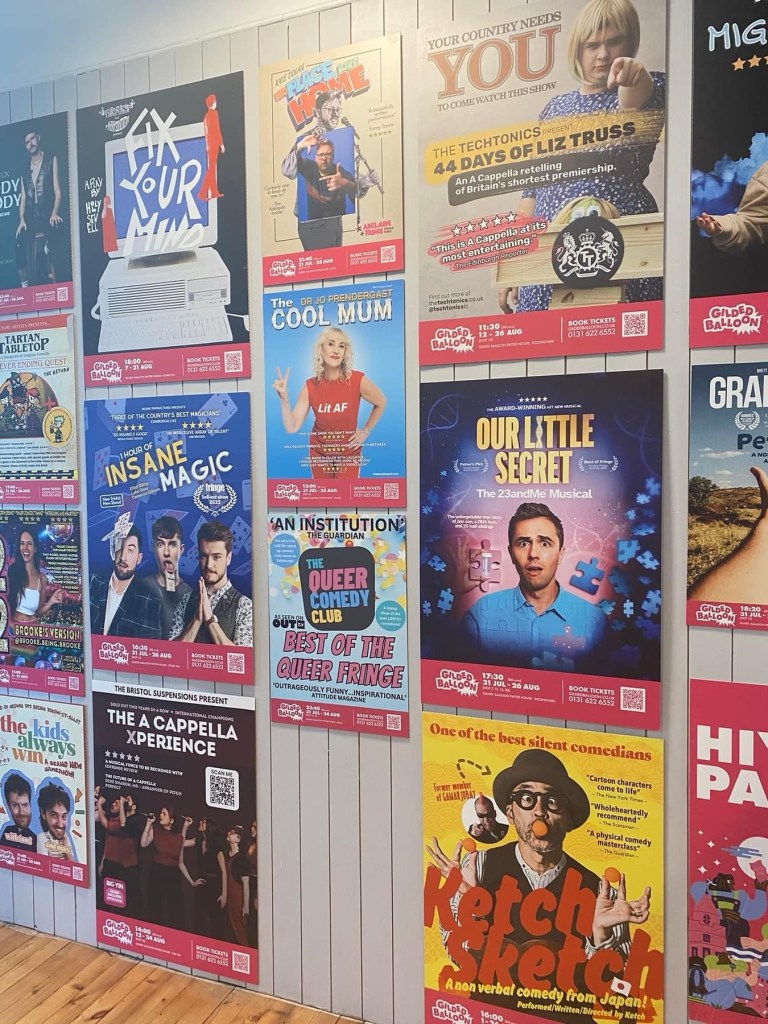
It can be overwhelming deciding what to watch at the Fringe, so the cast has been grounding ourselves in going to support our friends from the Big Apple (Manchester) and then dividing off to do our own thing.

“I’ve seen such a range of plays, from Italians in England – a classic Commedia DelL’Arte performance complete with authentic masks, hilarious caricatures and long distance slaps, to Disco Dick, an accidental coming out story involving a himbo dad and a sparkly, light up strap-on and finally, to My Son’s A Queer (But What Can You Do), featuring dazzling musical numbers and such authentic familial love and support that I was sobbing.”

Just some of the multitudes of performances

Hold Your Friends Close

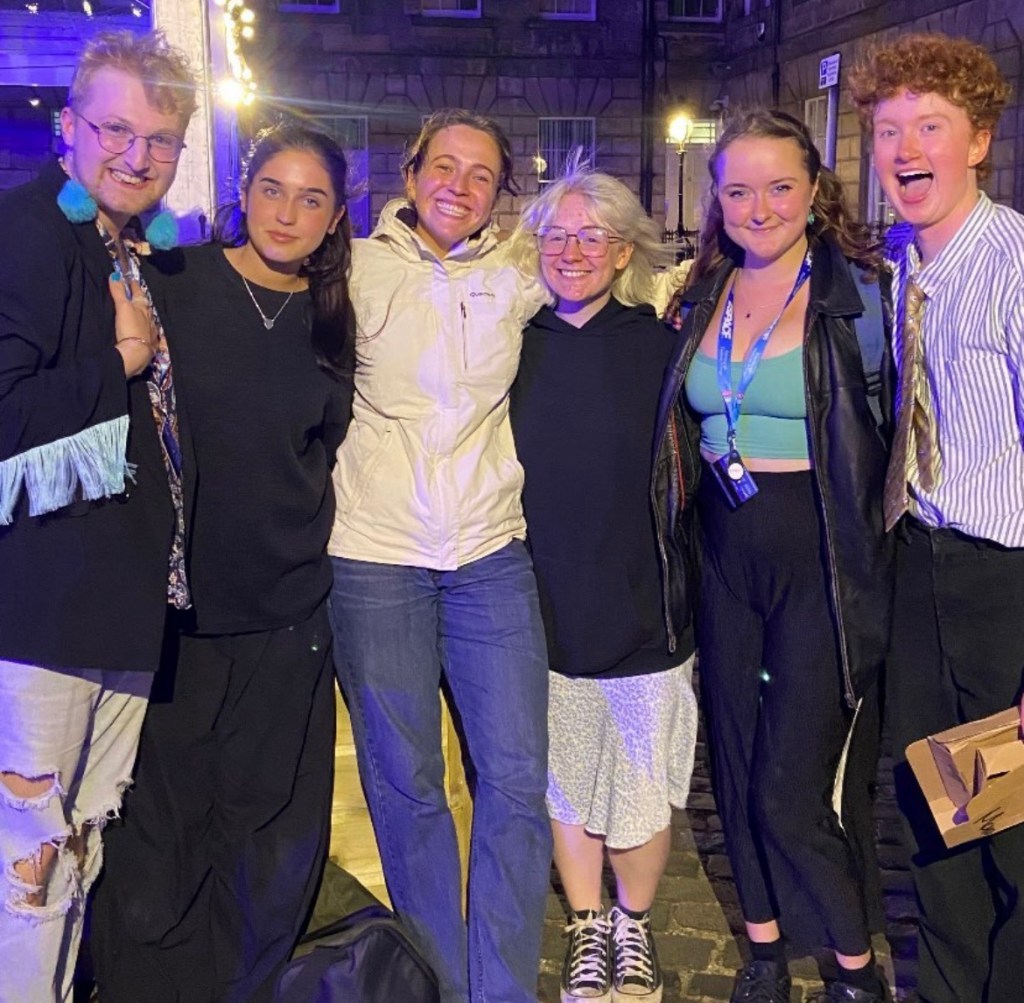
It’s a full-on experience. You may not have known your fellow cast and production members before your audition and rehearsal. Now you live and work together 24/7 reliant on the stage and after. It’s the cast and creative team that help make your Fringe experience so fun. When you’re throwing yourself into a situation as intense as the Edinburgh Fringe it will shock nobody that things get stressful at times.

“Being surrounded and supported by the loveliest group of people I know and trust completely means that we haven’t been taking those stresses out on each other, and even in the harder moments there’s nobody else I’d rather be here with.”

Credit: Collision Theatre

Live Every Moment

It takes many hours of rehearsals, production, marketing and fundraising before you get to Edinburgh. Then such an intensive, adrenaline-pumping time on stage. Improvisational skills are often tested by prop mishaps and the occasional spillage, but the skill of the actors, means that anything can be played for an even bigger laugh – or add to the drama that brings an audience to tears.

“We’ve been overwhelmed with the joyous responses of the audiences — especially exciting are the audible gasps at each plot twist, it’s so exciting to have our audiences so invested and involved. It feels like we’re building a lovely Naff Community!”

Credit: Collision Theatre

Don’t Forget To Eat

Budgets are tight and city-living expensive, working away from home. Nerves can kick in – for flyering as well as performing! – and you feel like you’re running on air. Yet stay fuelled and you’ll find a favourite haunt to eat that you’ll go back to more than once.

“I would personally recommend Piemaker to anyone and everyone who finds themselves in the South Bridge area. I have sampled both the macaroni cheese pie and the vegetarian haggis pie, at very reasonable prices for delicious pastries that you don’t find in every other bakery.”

Time-Out

It’s brilliant being able to see so many new productions all in one place, but if you get overwhelmed by the options or are wiped out from your own performance, there’s no harm at all in prioritising your well-being and taking yourself off for a little nap and/or reset.

“Don’t put too much pressure on yourself! Having the confidence and commitment to take your show to the Fringe is already a huge achievement, that’s the hardest part.”

And Finally

It’s those who stand with you and support behind the scenes that can make all the difference to your show and personal experiences. The venue staff who keep things running smoothly and sets nerves at ease. And the production team who keep everything in order, on schedule and who fix any problems so you don’t have to worry.

“Our wonderful executive producer Thea wrangled our various plans and preferences into a flexible schedule for both flyering and going to support our fellow Manchester-based shows, which was no mean feat.”

Credit: Collision Theatre

Catch the last performance of ‘A Naff Play About Spies’ on 10 August at 23:15, at The Annexe at Symposium Hall.

See ‘Letters From My Dad (Who Is Dead)’ on 12-18 August, 11.00 at C Venues Aquila Studio, Edinburgh._

Collision Theatre takes on the Edinburgh Fringe

This August, Manchester based theatre company, Collision Theatre, are attending the Edinburgh Fringe Festival, with two original performances created by local students and sponsorship by Citadel.

The company was founded in 2021 and made its Edinburgh Fringe debut in 2023, with co-Creative Director Michael Bryceson’s play, A Working Title.

Produced by other Creative Director, Sebastian Moulds, the performances were a huge success receiving two 4-star reviews (The Derek Awards and The Student newspaper) and one 5-star review (from Theatre Scotland).

These responses have gone on to motivate the company to produce two pieces of theatre to take to the Fringe this year.

We caught up with some of the cast and production staff to see how rehearsals are going and what they are looking forward to at the Edinburgh Fringe this year.

Rehearsal photos from Letters From My Dad (Who Is Dead) (Collision Theatre 2024)

What show will you be performing this year at the Edinburgh Fringe Festival?

This year we are very excited to be taking two original plays up to the Edinburgh Fringe Festival. The first of these is A Naff Play About Spies, a farcical queer comedy written and directed by Sebastian Moulds. The play mocks the spy genre, giving audiences an Austin Powers-esque parody for the modern generation.

Our second show is Letters From My Dad (Who Is Dead), an emotive drama written and directed by Michael Bryceson which follows the parallel lives of a dying father and his son as they navigate love, loss and what to do when you’re running out of time.

Can you give us an outline of what the performance is about?

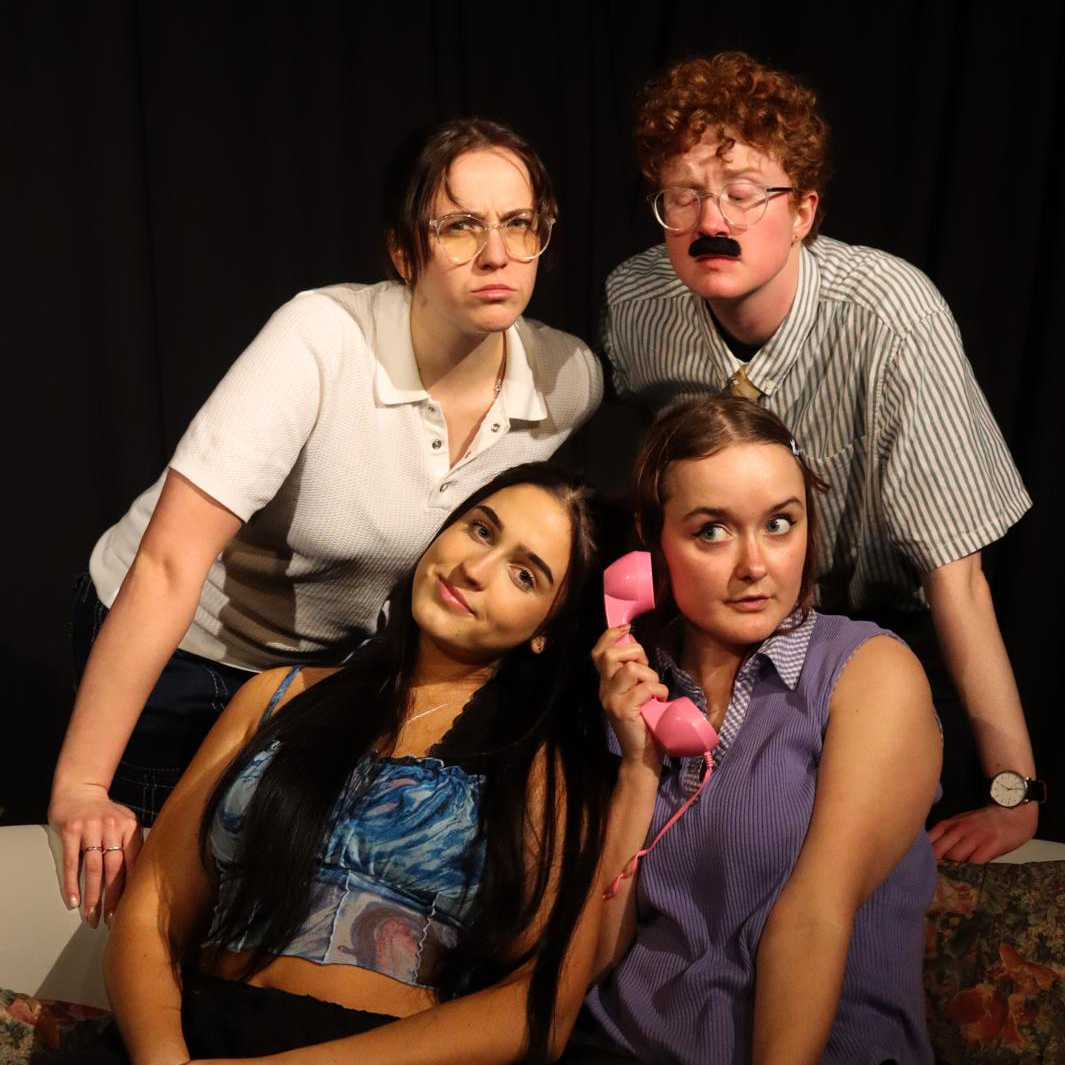
A Naff Play About Spies tells the story of Steph, Pat and Jack – three somewhat inept agents who have been tasked with investigating Natalia, Britain’s most dangerous woman. Under new identities, the spies infiltrate Natalia’s life, ready to face any obstacles (even hangovers) in their path. But the question is, have they got the wrong girl?

Letters From My Dad (Who Is Dead) is told through the lens of letters from a dying father to his son. After receiving a terminal diagnosis, Dad finds a way to remain present in his son Charlie’s life: writing him a letter for each of the big milestones he won’t be there for. Following Charlie as he grows up, this play takes a sombre look at family, legacy and what we leave behind.

Rehearsal photos from Letters From My Dad (Who Is Dead) (Collision Theatre 2024)

What are you most excited about going to the fringe?

We are so excited and incredibly grateful to be able to bring our shows to the largest arts festival in the world. The massive pool of talent and opportunity in Edinburgh each August is so unique, and we can’t wait to be a small part of that again this year.

Aside from our own shows, we are beyond excited to see all the other fantastic productions at the Fringe and to be fully immersed in the most intimate and raw art form that is theatre.

Some productions we are particularly looking forward to are those also heading up with students from University of Manchester, such as Speed Dial Theatre’s Telephone, Anti-Heroine by Pip Carew, and Helio Collective’s Look What We’ve Done.

What has Citadel’s sponsorship meant for you at the fringe? 

Citadel’s funding has made a huge difference to our costs as a student company. With no formal means of funding, venue and registration fees alone have been incredibly daunting.

Citadel’s sponsorship has ensured that no member of either of our shows, cast or crew, has had to worry about accommodation costs, which is a contribution we are indescribably grateful for.

We are certain that without this generous sponsorship, multiple members of our team would have been unable to join us in Edinburgh.

Catch, A Naff Play About Spies, from August 2nd to 10th at 23:15 at theSpaceUK Symposium Hall and Letters From My Dad (Who Is Dead) from August 12th to 18th at 11:00 at C Venues Aquila Studio at the Edinburgh Fringe Festival.

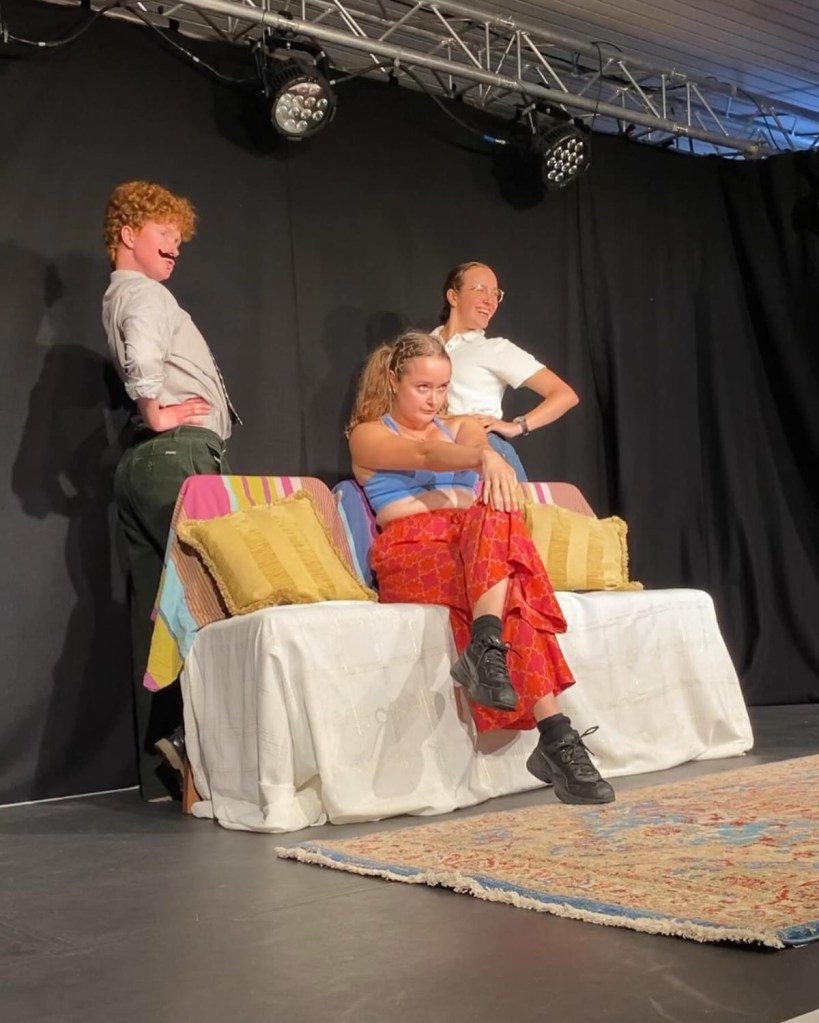
Rehearsal photos from A Naff Play About Spies (Collision Theatre 2024)

Always on my mind? Young people and the General Election

In the last general election, Brexit loomed large. Both the main parties were perceived to offer radical platforms, led by Boris Johnson and Jeremy Corbyn, and the SNP carried Scotland.

Yet barely half of young people aged between18-24 voted in 2019, whereas more than 80% of over-75s did. Why is there such disconnect, and what does this mean for the 2024 election?

Influencer GK Barry hosts The Turnout podcast in which she interviews political figures and simplifies politics for a younger audience.

In an interview with Grazia UK, she said “Having grown up seeing so many years of political confusion, failed promises, and being bombarded with political figures we can’t trust, it’s little wonder that so many young people have found themselves completely disengaged with politics.”

In the battle for votes, the parties have been drawn deeper into social media, like TikTok, but young people are savvy and social media does not have a great reputation for providing unbiased knowledge as we grapple with misinformation.

Despite this it is important to look at what the parties are saying. After a torrid five years of the pandemic, cost-of-living crisis and political turmoil, each party vies to be seen as a ‘safe pair of hands’ or to promise ‘stable government’.

What is the appeal to young people? There is a danger that all politicians are seen as “more of the same”, and young people simply not voting in enough numbers now and younger people who don’t see politics as relevant.

It could be argued that Conservative policies are “about” rather than “for” or even “wanted” by young people. From education and “Mickey Mouse” university courses to National Service, their policies are designed to appeal to the older generation, with little engagement or support from young people themselves.

This is exacerbated by the party’s contrary views on the big issues like Climate Change, leading its former Minister for climate change to leave the party and recommend people vote for Labour.

The Labour Party has pledged to invest in a new Young Futures programme; a network of hubs, will “support young people’s mental health and avoid them being drawn into crime and violence. As they look to secure a higher share of the 18-24 votes, there’s a pledge to go further and extend the votes to 16 and 17 year olds in future elections.

The Liberal Democrats have followed a similar path with their commitment to increase funding on youth services that are “genuinely engaging and reach more young people”, and plan to appoint a cabinet minister for children and young people. Like Labour, they would introduce votes at 16.

With voter ID and registration skewed against young people and the election called when a large number are between university and home, the parties have to work harder to secure their votes.

However, it is not just young people of voting age. With a week to go until election-day the fact that the political parties aren’t focusing their politics on young people makes it even easier to be disengaged.

Let’s not forget that 13-14-year-olds today will vote in the next general election in a 5-year Parliament, shaping their views now. Our parents and carers and grandparents also want the best for us, and their votes count even if young people can’t (or don’t) vote themselves.

Most critically, unless parties and government engage with young people represented at all levels of decision-making the democratic deficit will become a chasm.

See us. Hear Us. Involve us

An Insider’s View: Samuel Kasumu

With a snap General Election called this week by Rishi Sunak,we spoke with a former No10 adviser for his take on recent politics and what he’s hoping for from a new Government.

Samuel Kasumu was a special advisor under former Prime Minister Boris Johnson, up until April of 2021 and has worked as an elected local councillor in Hertfordshire.


After leaving Number 10, Samuel has been travelling and writing his new book, The Power of the Outsider, in which he reflects upon his experience in Government and the impact his early life had on his career journey.


“I think growing up in a single parent home, working, the social housing, moving a lot and going to different schools has all helped me to, firstly, have a sense of mission, but it’s also allowed me to understand the plight of ordinary people.”


“My background has very much shaped how I choose to live my life. It is what inspires me to want to make an impact.”


As for his experience in politics, Samuel believes it has shown him what you can achieve when in a position of power.

Before his first job in the House of Commons, he helped to run a social enterprise that would often struggle to get funding. But once he was working within the House of Commons, it took only 30 minutes of having a casual conversation over lunch one day for someone to offer that money and send a cheque weeks later.


“That taught me that, actually, to make an impact at scale, you need to get into the circles where people can leverage off funding and decision making.”


“There’s no point being outside holding a placard, you need to make sure you have a seat at the table.”


Working with two prime ministers in the last few years, Samuel believes his history in politics has made him much more pragmatic than he once was.


“I think I went into public life very much an idealist, which I am to a large extent, but I also understand that to get things done, you need to be able to pull certain levers.”


When asked what his thoughts were on what an in-coming government’s priorities should be, Samuel’s main response revolved around the current cost of living crisis.


“The Cost of Living crisis has had a huge impact on everybody’s lives, so it’ll be interesting to see how an incoming government views what is required to improve the lives of ordinary people.”


Fundamentally, to rectify the damage of the crisis, there needs to be a plan in place for growth to get Britain back to an economy that is inspiring, which currently he believes it not to be.


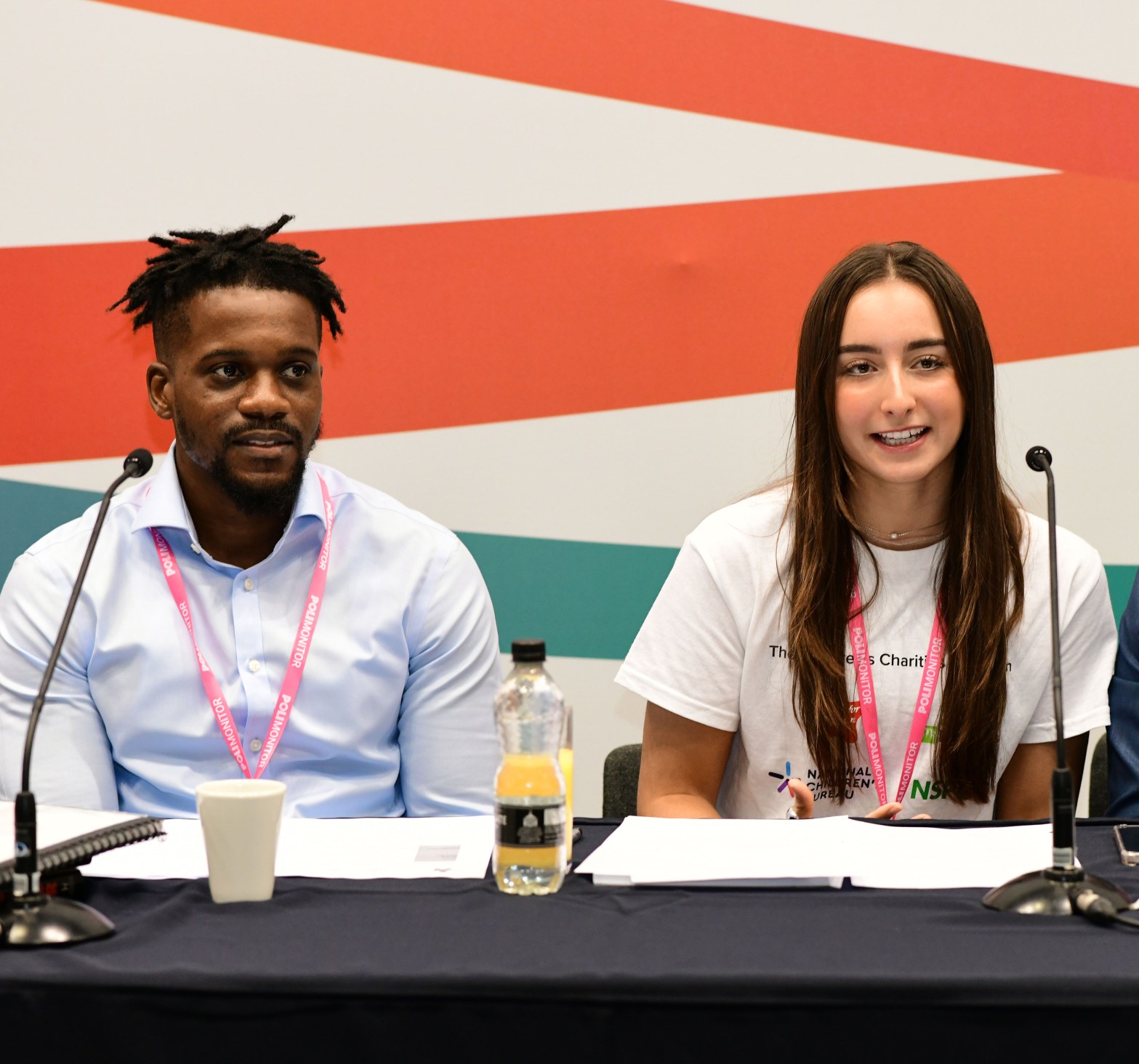
Samuel has also worked with Citadel and its founder, Jonathan Hopkins, on many different projects. This includes chairing panels in the Youth Zone programme of events now in its 15th season at the party conferences.


“Citadel engages with individuals and stakeholders at the highest level, to try and improve outcomes for young people.”


“As we head towards a general election, I think this will be pivotal in making sure that better outcomes for young people is at the heart of all the parties’ manifestos and commitments.”

Forethought: young people’s mental health

As we come to the end of mental health week this year (13th-19th May 2024), it is important to look to the future and see what plans and ideas have been outlined as necessary to help the mental health crisis, particularly amongst young people.

As a 24 year old who has suffered from many different mental health conditions from the age of 13, I understand just how important early care and mental health intervention is.

As ‍Dr Camilla Kingdon, former President of the Royal College of Paediatrics and Child Health says, 

“There is a huge evidence base for the importance of good mental health in childhood. However, sadly nearly 50% of lifetime mental health conditions are established by 14 years.”

According to a new report published at the end of April by Child of the North and Anne Longfield’s Centre for Young Lives, half of England’s school children are without mental health support teams and will still be after 2025 with the current plans in place.

The think tank puts forward a plan for the Government to boost children’s mental health via the education system. 

Currently there are approximately 1.4 million children and young people (aged 8-17 years) with a mental health condition in England and a further 4 million children will not have access to mental health support in schools without further dedicated funding. Preliminary data from a study in Bradford of 5,000 children and young people, revealed a shocking rise of eating disorders and self harm in the area. Two of the priority issues causing detrimental mental health were also identified by young people as sleep deprivation and loneliness. 

Additional resources may have helped me earlier in school. However, it will take a significant change of school-culture to be effective, for inclusive schools that embed young people’s wellbeing and life skills, rather than driven by exam data and ‘character-building’ that all too often pushes rather than nurtures young lives. 

Much of that support stops at the school gate unless you are patient enough on a horrendous waiting list for counselling or lucky enough that your family can afford to ‘go private’. The thresholds for statutory services are very high. 

So what can we do about it? The Centre for Young Lives calls for several recommendations to be made by the next Government. These are not limited to:

• Expanding the mental health support offered through schools and educational settings

• Supporting the creation of a network of ‘one stop shop’ local online NHS information hubs

• Harnessing the power of digital technology

• Tackling the upstream determinants of poor mental health

• Addressing the workforce crisis in educational psychology provision

This is an attempt to respond to young people’s needs, not simply to react to a crisis. Nevertheless there is a very real mental health crisis in young lives. New community hubs for young people’s mental health are due to start in some areas funded by the NHS, including with the charity Brook in Cornwall providing wrap-around support and in the transition to adulthood.

Back in January 2024, The Labour Party released a Child Health Action Plan.  

With over 200,000 children on an NHS mental health services waiting list in England, Labour have promised to cut this in half by recruiting thousands more staff and introducing specialist mental health support in every school. 

Since then, Labour has carried out a further review of early help and prevention for mental health across all ages, yet to be published. 

What we want to see from whoever is the next government, is a commitment to provide mental health support for children and young people throughout the course of their lives.

After being diagnosed with anxiety at 13, depression at 14 and a further panic disorder during COVID-19 at the age of 20, I have experienced first hand the difficulties of being a young person with poor mental health. 

Whilst my school was ill equipped to support or even recognise my special needs, I was also hyper aware of the lack of resources provided for young people once they have left school. 

The emotional, physiological and mental development of young people does not end until they turn 25, yet, as experts have previously said, untreated lifetime mental health conditions are established by the ages of 14. 

The recurring theme I encountered throughout my mental health journey as a young person was that if you didn’t have the money and support to go privately for help, you most likely wouldn’t receive any. The public mental health services have so little funds that the small amount they do have is used to support children and young people after something traumatic has happened, rather than to prevent it.

The next government must reassess funding priorities to address the shocking number of those who have no or have to wait years to access basic mental health prevention. This, combined with more specialist support in schools, a safe and recurring place in a child’s life, will take some of the strain out of an overburdened system and better prepare young people for the rest of their lives.  

Getting ready to go to the polls

Why elections matter to our young people

Will they, won’t they? The Westminster gossip is all about when the general election will be called. Despite early hints to the contrary, a snap election on 2nd May is now firmly ruled out. Yet, across England, elections will take place on that day. We go to the polls for local councils, combined authorities and mayors, and Police & Crime Commissioners. 

As the election campaigns gather pace, we asked Stuart Dunne, CEO of Youth Focus North West, why the regional agenda is so important for young people who aren’t entitled to vote.

Youth Focus NW is one of six regional youth work units in England, which act as hubs to develop and support youth work to meet young people’s needs in their regions. 

Stuart said: “It’s no secret that young people face a number of challenges such as the mental health crisis, poverty and feelings of not being safe.

With the North West having some of the highest levels of deprivation, our services are vital to providing support to young people in those areas, helping them also to understand their local politics and identity.” 

So what does an election year mean for young people and what impact does their voice make on decision makers? Mayors include Greater Manchester and Liverpool City Region, with devolved powers from government. Police & Crime Commissioners who join up services within the regions, to secure early help and prevention and crime reduction. Some local council seats will be open for election in challenging financial times for funding local services. All play a significant role in determining support for young people’s lives, in services and activities across communities.

“Most of the challenges young people face today are not singular but multifaceted and therefore political ideology of dealing with singular issues just doesn’t work anymore,” said Stuart.

“Yet a lot of young people have a sense of belonging to areas when they feel valued, safe and provided with hope. When we bring young people from the North West together, they do have a sense of pride and belonging.”

According to Stuart politicians can do a lot to help young people aspire and succeed:

“I think there is several things politicians can do. The first, is to treat young people as equal citizens with rights, young people are not only the future of this country but are very much part of the present as well. 

“The second, is to listen to, and value what young people say. If we want to develop young people’s sense of belonging and agency then listening and valuing their contribution is a minimum requirement. 

“Thirdly, create policies that focus on young peoples strengths as well as societal challenges. The fourth, and final point is for politicians to act and behave as young people do, when they sit as the UK Youth Parliament, in the House of Commons.”

In his 12 years of working at Youth Focus NW, Stuart has a tremendous amount of insight into the significance of youth work for future generations.

“Youth work is a unique discipline that helps shape and guide young people into becoming active citizens.

“This is so much more than being about paying taxes. Our young people are equal citizens  in their own right. Across a range of activities, such as volunteering, we help each other and embody the true value of democratic engagement.” 

Youth voice and shared experience is core to Youth Focus NW and young people’s participation “as equals” with politicians. While the date of the general election is still in doubt, Stuart and his team are working with Citadel to get ready for Labour Party Annual Conference. This is to be hosted again in Liverpool, in September. They will deliver events led by young people engaging directly with senior politicians which, if the opinion polls are to be believed, will include Labour Mayors and likely Ministers in the next Government. 

This sits proudly in the heart of a full programme of events organised with the youth sector, entering our 15th annual conference season. 

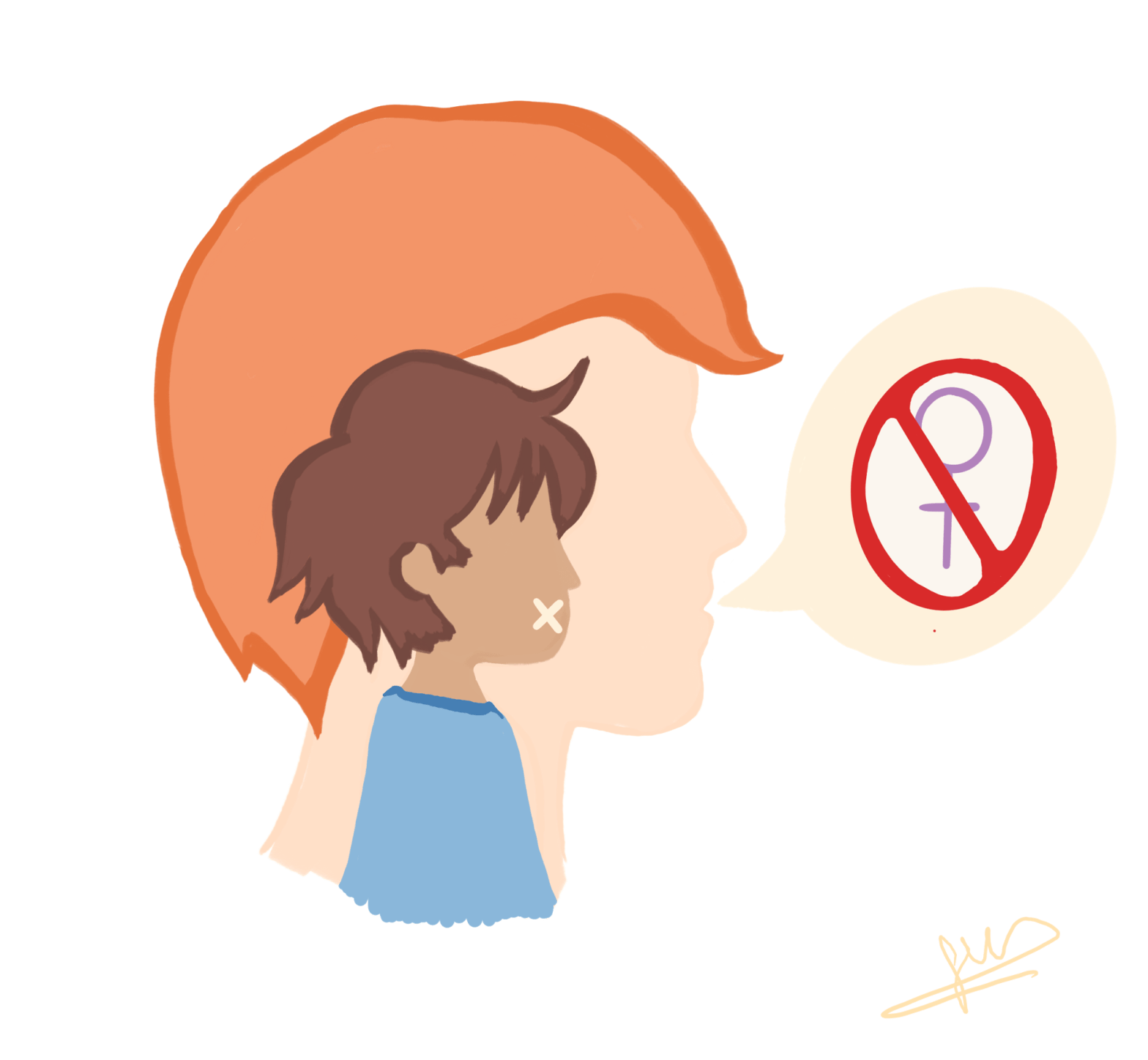
Breaking stereotypes: Navigating misogyny with young men

In order to combat sexual harassment, the Labour Party announced plans to help schools develop young male mentors to teach pupils how to question the material they see on social media from influencers, like Andrew Tate.

Under the same proposals regional teams will work with schools to train staff on introducing a peer-to-peer mentoring programme to tackle misogyny.

As with most young people today the word misogyny is a very loaded term. Society has a habit of falling into the trap of buzzwords without going into the detail of defining them. The dictionary definition of misogyny is hatred or prejudice towards women.

Nowadays, most infer the term misogyny to be solely based on hate towards women. With its increased use particularly in the media, the term misogyny has been used primarily as a determination of gender based violence, something which up to 9 out of 10 women are more likely to experience.

Labour’s plans look to peer groups and more young people becoming influencers to counterbalance misogynistic influencers head on. Yet how a term like misogyny is used is very dependent on the community it is used in. Will a schools-based approach work? 

When young men are called out for their misogyny, this mostly comes in the forms of scolding or mirroring behaviour. It can create a difficult tension between empowering young men to disempower themselves when for some street environments might be dangerous. Understanding cultural norms and sensitivities is important.

In short, boys don’t like to be told they are misogynistic – ‘the more populist it is the more defensive they seem to get’. With 85% of a young person’s waking hours spent outside of the school day, and with around the clock access to social media, how does this relate to youth work and the direction it should take when teaching young men about misogyny?

A lot of the time young men don’t really know why they are demonstrating those behaviours, but for many they have never been asked about it before. 

In an attempt to connect, youth workers must be prepared to listen to what the young men in their groups have to say. This supports the notion that safe spaces should be renamed to brave spaces.

1. Curiosity – explore masculinity and what it means to boys and young men

2. Reflexivity – try to think about how you impact the interaction at that moment

3. Interaction – keep them engaged and keep a sense of humour!

Young men being open can make them vulnerable with others.Validation is needed throughout these discussions with young men. 

When dealing with misogynistic jokes and comments amongst young people, it is important for the youth worker to be brave and confident, but not to target an individual. Look at the situation as a collective and why it may be happening, because you are not trying to challenge one person but trying to change a culture and community. 

In order to do this, youth workers must have a passion and interest in making these changes for the young people and take some responsibility for this. To have an understanding of what the issues are facing young men, and the different masculinities in different communities, is the best way to reflect and tackle the issue of misogyny.

Breaking stereotypes: Navigating misogyny with young men was hosted by the National Youth Agency (NYA), supporting an understanding misogyny in its many forms and how youth workers can become more aware of misogynistic behaviours amongst the young men they work with. 

Healthy Relationships: in conversation with Helen Marshall

After 8 years at Brook and previously a youth charity leader since 2010, Citadel has an enjoyed a long and trusted relationship with Helen Marshall. 

Brook’s unique combination blends clinical services, relationships and sex education (RSE), outreach in community settings, wellbeing programmes and counselling, all under one roof.

“At Brook, we believe excellent sexual health, mental health and wellbeing is a right. One of our main objectives is to increase the accessibility of provision in these areas to ensure everyone can receive the help they need.”

“Citadel is supporting us with strategic input to our growth plans in the areas of mental health and neurodiversity/neurodivergence.”

“For us, the links between mental health and sexual health are all too apparent, and for decades now young people have asked us for support with their wider wellbeing.”

Brook works towards fighting stigma and combatting any damaging narratives that lead to preventing this who might seek support.

“People need to feel safe, represented and welcomed when they walk through the door at these services, and at Brook we model an open, inclusive and kind approach for the wider sector.  Working with partners we seek to inform and influence national policies and model new ways of working.”

Brook’s work is extremely important regarding sexual health resources as England has some of the poorest sexual health outcomes in Europe.

“Understanding of, and attitudes towards sex and relationships can have major impact on many aspects of people’s lives; it can also be linked to things like violence against women and girls.” 

This includes early help extended into schools with Brook. Products and education resources are based on cutting edge research and years of experience championing young people’s health. 

“When it comes to RSE, the majority of teachers are still not receiving the necessary training and support to teach the subject confidently, and as a result young people are leaving school feeling unprepared to safely navigate sex and relationships.”

When working with Citadel, we asked Helen if she had any highlights about the company and projects they have previously worked with us on. 

“Citadel supported Brook’s rebrand and new strategy in 2016 at a challenging time for the organisation.  They championed our work and helped reshape how young people were involved in developing their own services.”  

“Citadel also led the initial public affairs focus for Brook starting from minimal activity and has continued to support how we engage across the political spectrum.”  

Currently, with support from Citadel, Brook have begun to develop a new early intervention mental health and suicide prevention service.

Brook’s safeguarding work has shown an alarming increase in unmet mental health and wellbeing needs. Recently, at Party Conferences, a joint event was held to go over Brook’s plans for community mental health hubs, co-ordinated by Citadel. 

In terms of the future, Brook have big things planned.

“2024 marks the 60th anniversary of Brook and we have exciting plans to celebrate all that we have achieved, while building support for the vital work that still needs to be done.”

Connecting policy to practice in support of young people

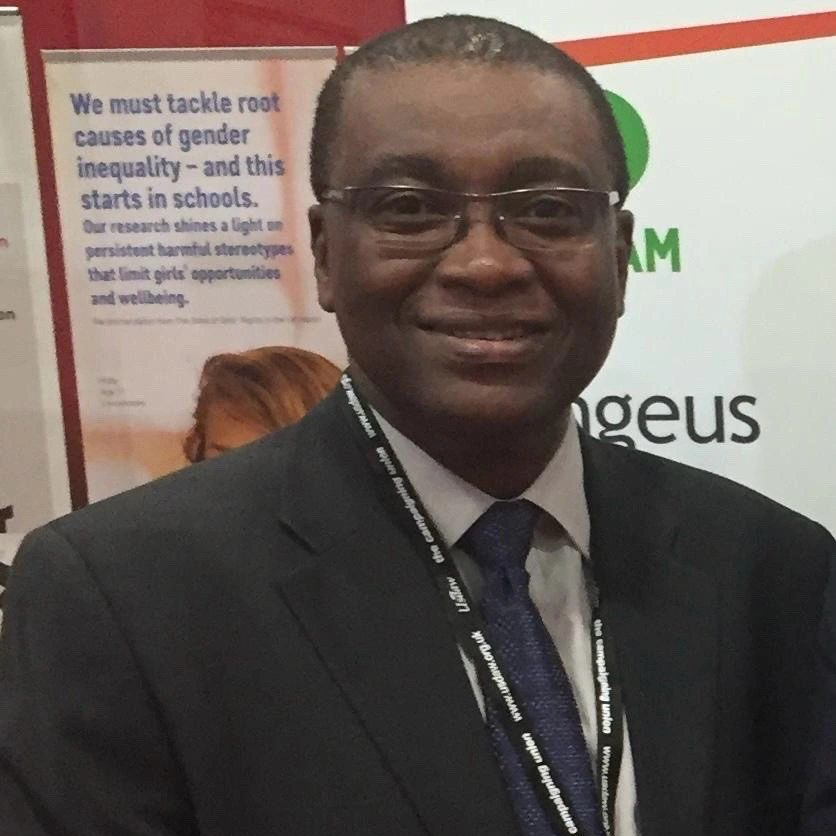
In conversation with Centrepoint CEO Seyi Obakin

As 2023 draws to a close, here at Citadel we are looking back at all the work we have done over this previous year. As a founding client, Citadel has worked with Centrepoint continuously for 18 years. Centrepoint CEO Seyi Obakin agreed to take a trip down memory lane and reflect on their own history, as well as their relationship with Citadel.

In 2003 Seyi joined Centrepoint as Finance Director before becoming CEO of the charity in 2009.

“Centrepoint was conceived in 1969 by a group of energetic people who looked at the number of young people sleeping on the streets of London and instead of saying ‘something should be done’ thought ‘what can I do?’”

“With £30 in the bank, they started an ambitious voluntary venture to provide a safe and secure place to stay for young people sleeping on the streets of London. They gathered the food and bedding needed and, importantly, worked with the young people they supported to seek the skills and employment needed to move on to independence.” 

With Seyi at the head, Centrepoint have set the ambitious goal of ending youth homelessness by 2037.

“We understand that youth homelessness has many interlinked triggers and therefore, its threat can never be removed for young people.”

“However, we believe it is possible for the number of young people being made homeless to become negligible; rapidly to provide a place of safety and security for those affected; and to resettle them into permanent homes as soon as they are ready to live independently.”

The core of Centrepoint’s work revolves around working directly with young people who are experiencing homelessness, to help empower them to gain skills, jobs, and affordable homes. Through assisting central government and local authorities and promoting public awareness to the mobilisation of donors and volunteers, Centrepoint support more than 1,500 young people every day and 16,000 young people living elsewhere, both through their partner charities and directly.

Centrepoint has the longest standing relationship of all Citadel’s clients. This special collaboration is built on respect and trust from their stakeholders, their relationships within the policy-makers and with other charities have paved the way to improve future outcomes for young people.

“Centrepoint works directly with young people, but it must also influence systems and orchestrate change nationally, regionally, and locally. [Citadel’s] ability to connect Centrepoint with and influence key political stakeholders is second to none.”

“One example of such an outcome is persuading the government to cancel its plan to withdraw automatic entitlement to housing benefit from 18–21-year-olds and another example is persuading the government to exempt young care leavers from the Shared Accommodation Rate.”

The policy brief looks more broadly at support for young people to prevent homelessness, those at risk of homelessness with multiple and complex needs, supported accommodation and to move on towards independent living. As we emerge post-pandemic and into a cost-of-living crisis, over the last year work with Centrepoint has focused on what a youth offer from government could look like for 16-24 year olds, too old  for children’s and ill-suited to adult services. 

“Citadel understands that youth homelessness has many complex triggers and that many young people fall between the cracks of various agencies, charities and local authorities. They are therefore always looking for ways to bring people together so that the journey from homelessness to independence is as brief as possible.”

What next together, as we move towards an election year in 2024?

“Society as a whole and our communities are all evolving, creating new challenges all the time. Bringing people together – national, devolved, and local governments, voluntary organisations, civil society, etc – will remain critical to tackling these challenges. The thought, skill, and brokerage that Citadel offers so skilfully would remain intrinsic to finding solutions.”

See us, hear us

Over 80 young people led debate and discussions with politicians at this year’s annual party conferences.  As part of Youth Work Week, 6-12 November, we spoke to three young people from the north west who hosted events at Conservative and Labour conferences in Manchester and Liverpool respectively. We asked them about their experience and why they believe young voices should be heard more clearly by local councils, regional mayors and in parliament.

How do you think politicians can help young people aspire and succeed?

“I believe that this can be achieved by better promoting youth voice opportunities, such as youth councils and youth combined authorities.”

By giving them a bigger platform more young people will have access to them and that they are of an excellent standard.

“Additionally, I believe that the ideas and policies of politicians need to adapt too; as a young person, we hear frequently that we should be ‘seen, and not heard’, and so often, our voices in political settings, such as council meetings, can feel like a tick-box activity, and that isn’t right.”

“One of the main reasons young people don’t want to be involved in youth voice is because they see it as ‘pointless’ and don’t think it will go anywhere.”

Politicians need to show us that our involvement is so powerful and beneficial, but that only comes from responding to us; our questions, our emails, and our criticisms too.

April, Youth Focus, Knowsley Youth Cabinet

“I think politicians can work with young people and amplify their voices, since they have platforms that allow them to do so.”

“They can work with young people to make them feel confident in themselves and make sure that they know their potential, not only in politics but in all aspects of life.”

Leia, Warrington Youth Council

“I believe the best thing a politician can do is to listen. The role of a politician should be to represent the views of various people, including young people.”

“Therefore by stopping and listening to what young people have to say this can be very helpful in their own development as it demonstrates that the system of representative democracy can work and that young people will be listened to; so they should not give up as success is possible within this system.”

Aaron, Trafford Youth Council

What have you seen work in the youth sector and what would you like to be added?

“Politicians should meet regularly with young people in their area to make sure that their voices are heard and taken on board in decision making.”

Young people that want to, should be able to contribute however they wish to their community and it’s up to the politicians to make this happen. This could involve removing barriers that stop young people from participating in events, like costs and transport.

Leia

I have seen the campaigns I have been involved in, such as Knowsley Youth Cabinet’s ‘Stop the Knives Ending Lives’ be successful, yet it is no secret that better involvement from local councils would improve this further. With this, I believe that council’s engagement with young people should be mandatory, and not optional.

“I also believe that it’s crucial for decision-makers to go into schools to actively talk to the young people they’re representing, as well as promoting youth clubs and opportunities to those who aren’t in school for a variety of reasons.”

At Knowsley Youth Cabinet, we are currently devising a list of instructions on how council meetings can be more inclusive to young people. Whilst we are frequently invited to them, it is a common occurrence that we, as young people, don’t always understand what is being said and, as a consequence, our presence there feels patronised.

April

“From my personal experience when engaging with young people, politicians should try to do it in the most relaxed environment possible. Often politicians can seem intimidating, so instead of making a young person present their ideas better outcomes often come out of more relaxed discussion.”

Aaron

If you could send a message to your older self, what would it be?

I would remind myself to engage with young people more. Just because young people may never have paid taxes and have not seen as much of the world yet, does not mean they are naive.

“A young person will often provide a new perspective which may have been overlooked and if the matter at hand involves politics and policy making many will be extremely passionate and engaged.”

In this case, I would tell myself that whenever I am stuck, ask for the input of a young person, as the chances are they will be able to provide a creative solution to the matter at hand.

Aaron

I would like to tell my older self to stick to what she believes in. I would say to “make sure to stay open minded, but don’t be swayed by someone who tries to convince you that you aren’t capable.” I want to remember that as a young person I have every right to be in the places I am and that I deserve all the success I gain from this.

Leia

If I could send a message to my older self, it would be simple: remember this moment!

“Considering I want to go into a future in politics, I want to remember how much these youth voice opportunities supported me in getting there and just how much they allowed me to grow.”

Whether that be through gaining confidence and communication skills, or through the people I’ve been honoured to network with and, even all of the incredible events I’ve been privileged to attend along the way.

As cliché as it sounds, I can safely say that I wouldn’t be the same person I am today without my youth council and all of the opportunities it has created for me. They mean everything to me and more.

“I am eternally grateful, for everything and everyone that has supported me on my continuing journey in politics, they’re the people and the opportunities that I’ll never forget and have undoubtedly changed my life, so thank you.”

April

Youth Work Week’s celebrates the youth workers, young people and everyone who funds and commissions within the sector. 

This year’s focus is on youth work in every space and place, looking at every job, in every location that contributes to the future success of youth work. #YWW23

With thanks to Youth Focus NW in supporting young people to take part at the party conferences and the publication of this article