Y is for #YouthMatters

So what has changed, what matters most about #YouthMatters, the government’s new national youth strategy?

The mantra of somewhere to go, something to do and someone to talk to was first coined under New Labour over 20 years ago and survived under each government since, from Coalition to Conservative and now the returned Labour government. The original 2005 Youth Matters had five outcomes. Today’s is distilled into four but with the same core ingredients to build skills, be safe, stay healthy and a sense of belonging. This was echoed under the previous Conservative government with skills for life and work, mental and physical wellbeing.

However, years of austerity saw the devastation of youth services and sidelining of youth policies outside of formal education, youth justice and clinical health – and kickstarting youth employment when young people not in education, employment and training has remained stubbornly high. Cash strapped local authorities cut youth provision other than statutory requirements and the escalating costs of children’s social care and SEND.

Those pressures are still live. Yet more than reversing the decline of youth work the new youth strategy pivots on ‘trusted adults’ appropriately trained and skilled across professions and services: every young person to have someone to lean on. In seeking to close the gap of opportunities and participation between young people from richer and poorer families, it restores a tranche of funding that in past years was used to set up and run the National Citizen Service born in the days of the Coalition Government but ended last year by Labour. Actions include the first steps taken to set up Young Futures Hubs, better connecting local services in health, employment and crime prevention, providing early help dubbed ‘Sure Start for Teenagers’.

This is indicative of the major shift in government policy: setting outcomes and expectations of what we want for young people; devolving funding and delivery to local partnerships convened by councils and co-designed with young people. Each action drawing in policies and commitments from across government departments for a wider youth offer, notably enrichment opportunities in schools and a Youth Guarantee in employment.

The strategy is built from a groundswell of opinion not top-down directives. It is a gear shift in what the Labour government is now offering, backed by actions and accountability measures to deliver with and for young people over the next 10 years.

Moving away from New Labour’s performance indicators that measured to the nth degree, the new strategy is built bottom up from an evidence base and collective response from young people – seen and heard – and their lived experience.

The world has changed significantly in 20 years, and continues to change at pace. National challenges needing local solutions. National outcomes set to end a post code lottery of services. Equitable access breaking down barriers to opportunities. National renewal delivered with and by young people, responding to the crisis in metal health, future employment and fear of crime.

Youth voice taken seriously is the catalyst for change. Introducing Votes at 16 may focus political minds, but engaging, galvanising and empowering young people takes so much more. Better connected communities don’t simply reduce isolation, they create a sense of belonging that can be the only long lasting answer to the misogyny and racism that is endemic and promulgated by the algorithms of social media. As an ageing population we rely on the skills and talent of young people today. When unleashed, that is a powerful force for good.

Therefore the biggest change from earlier youth strategies is that it is more than helping the individual to get on in life and their social mobility. It frames a narrative and ambition for us all: it represents a generational shift where young people are seen and heard. With young people put in the driving seat it will deliver a more confident and close knit society – our national renewal.

Jonathan Hopkins is a member of the DCMS Expert Advisory Group for the national youth strategy, and adviser on past government strategies.

X is for the X-Factor

To vote is to put the X on the ballot paper. It’s a democratic right, hard fought for and gained across centuries. The next UK general election will see the voting age lowered to 16. What can we expect? The youth vote may turn out to be the X factor that could have the most significant impact on the outcome.

The rise of the populist tide is bringing political debris of xenophobia to the surface and risks a tidal surge of nationalism that drowns out centrist politicians. Personalities outdo policies. Truth is sacrificed for power. Sound bites trump complexity. Propaganda is amplified by algorithm. How to make sense of it all?

Political education starts with asking the right questions and a curiosity of how decisions are made that impact everyday lives. Influence is gained when experiences are brought to the fore, real life stories are told and those voices are heard by decision-makers. When connections are made and social networks are galvanised to bring pressure to bear. In a democracy, it is to better connect communities for the common good and shared goals, and the collective response to support more vulnerable groups in society.

The loss of trust in politics is perhaps more pronounced in the younger generation with low voter turn out at 18-25 years of age. Yet the fracturing of support for political parties and with politicians needing to win over 16-17 year olds newly enfranchised, the race for the youth vote starts with young people 13-plus of secondary school ages entitled to vote at the next general election. Looking beyond schools and youth services, this is a generation of young people staring at the brink of climate change, mass migration, insecure jobs and stunted careers and a burgeoning national debt propping up an ageing population.

The party or politicians who work hardest to secure the youth vote – much more than school visits and hustings – will have a jump start to power at the next election, and energise the base for democratic renewal restoring hope and trust in mainstream politics. The hope for us all is that young people will help us turn away from the politics of hate and division, and bring a closer knit society where tolerance and kindness are seen as essential traits for strong and effective leadership.

W is for What Works

It’s as plain as the nose on your face. We want the government and policies to do what works best. How we invest finite tax revenues to make our lives better. How do we know what works, and who’s to judge what’s best? There are competing interests and conflicting claims. What’s best for one group may not be good for another.  

It can’t be a blanket approach, not one size fits all. Our lives, the communities we live in and societal goals are interrelated, each multi-faceted and complex. So, where do we start?  

In a democracy, it starts with what the government – national and local – has been elected to deliver, its mandate. This is less a detailed manifesto, as the shifting sands of politics moves the ground on which decisions are made. More a direction, clear purpose and goals. It’s what we want for and expect of citizens, a social compact if you like. Dealing with everyday challenges but delivering over the longer term for each generation to thrive – ‘what we want for and expect of young people’ is a driving force for generational change.  

Once that direction is chosen it needs a firm foundation of policy-making, based on facts and the reality of young lives. There is an attempted shift in policy-making towards early help and preventative measures, removing barriers to opportunity with young people and their families and within communities, delivered – and seen to work – locally. It’s not enough to promise a better future. Reality bites. It is what we know works from the experiences of those it’s supporting, and readily understood by those not directly affected as being part for the common good, with clear purpose and shared outcomes. 

Therefore, a strong evidence base is crucial to policy making. Recent governments have drawn heavily from ‘what works’ centres for cross-cutting issues and challenges to drive meaningful systems change. 

Citadel’s work supports Youth Future Foundation’s‘Future for policy-makers’. It’s aim is to tackle the thestubbornly high level of youth unemployment and inactivity, with the national What Works Centre for youth employment, specifically focusing on marginalised young people.

Vicki Jones, Joint Head of Public Affairs and Stakeholder Engagement, told us:  

“We want to see a society where every young person can achieve good work. We find and generate high-quality evidence to better understand England’s youth unemployment and inactivity challenge, and most importantly to learn what solutions work to address this. We do this through bringing together the best evidence already in existence and build on this by conducting original research and testing, and evaluating promising interventions to produce much-needed new evidence where there are gaps.” 

Youth Futures works with national, regional and local policymakers, to build more impactful public policy that helps marginalised young people enter and stay in good quality education, training and work. The goal is to see England’s NEET rate for young people fall to match the best in the OECD by 2050, and gaps in education, employment and training outcomes for specific groups of marginalised young people to be removed. 

“Matching the Netherlands’ NEET rate could move 567,000 young people into work or education, and boost the UK economy by £86bn in the long term,” said Vicki.  

“In the short term, the public affairs team will work towards ensuring that high-quality evidence underpins more public policy that helps marginalised young people to earn and learn. The challenge is even greater for the most marginalised, who face systemic barriers to finding and keeping good work,” she explained. 

“Therefore, to break the intergenerational cycle, we generate high-quality evidence and turn it into action, collaborating with policymakers, employers, and funders, and meaningfully engaging young people most affected by the system.” 

This looks not just at ways of supporting young people into work. It explores the causes of youth unemployment, building  an evidence base of early interventions and preventative measures to remove barriers for young people; and an asset base  for young people to thrive, sustained in work over the longer term. 

The recently published report, ‘Understanding drivers of recent trends in young people’s mental health’, explores the inseparable challenge of mental health and youth unemployment. 

“This was the first study of its kind for England providing a better understanding than ever before about why mental health problems among young people are rising, and the different factors driving the growth of mental ill health among 14-24 year olds in England,” said Vicki. 

“Previous efforts to understand the causes of young people’s declining mental health have  often focused on examining drivers in isolation and many competing theories have been suggested. Our approach goes significantly further by evaluating multiple proposed  explanations using a combination of data analysis and literature review, assessing the  strength of evidence supporting each one and highlighting where important gaps remain.” 

The research indicates that the decline in youth mental health is driven by a number of factors — including deteriorating sleep quality, growing financial insecurity, reduced access to non-clinical support services, and the influence of social media and smartphones. Gaining a deeper understanding of these underlying causes is essential to developing effective, targeted solutions. 

Such targeted solutions can be strategic, including collaboration with Citadel and others on the role of ‘trusted adults’ in young lives, and national policies specific to 16-25 year olds as a discrete age cohort for policy-makers and funders. 

There is also evidence and practical learning for particular challenges, for example care experienced young people: 

“One of our partners is Drive Forward Foundation, who provide packages of support for care-experienced young people, designed to help them develop the skills and networks they need to find fulfilling employment, while also supporting them with the other barriers in their lives,” Vicki told us. 

“We initially funded Drive Forward in 2021 to deliver support to 236 care experienced young people and then funded an independent evaluation to develop and test the programme’s Theory of Change and understand more about the young people’s outcomes, and also to explore the feasibility of delivering on an impact evaluation of the programme. We were delighted that the findings showed promising evidence and the delivery model is suitable for an impact evaluation which is why we have now commissioned a randomised control trial with 550 young people in London.” 

Over the last 20 years of Citadel and in support of Youth Futures Foundation and the work of others to champion young lives, it is clear that lasting change can only be secured if it is based on facts and evidence of ‘what works’.

“We’ve had the pleasure of working with Citadel for several years on our party conference activity in particular, and we’ve been proud to play a key role in supporting the Youth Zone. Jonathan has been instrumental in planning an ambitious programme of events—including panels, roundtables, and receptions—designed to drive change in policy and practice, so that marginalised young people have the opportunity to access and thrive in meaningful employment”, added Vicki. 

For Citadel, to get this right with young people is crucial for us all against the rising tide of populist politics. It through young people that we will achieve the change we want to see, supported in the present and ambitious for the future. 

V is for Volunteering

As Government policies shift towards increased devolution and place-based approaches, delivering across communities and in neighbourhoods, the role of volunteers has risen up the political agenda.

Feted during the pandemic and augmenting public services through charities and community groups, there’s nonetheless a national shortfall of volunteers at a time when there is high levels of need in our communities. This critical role has long been the stitching to our social fabric and, after years of austerity, with public services and the civic realm coming apart at the seams.

To volunteer is not the same as charity or philanthropy. Formal volunteering is defined as unpaid help given as part of groups, clubs or organisations to benefit others or the environment. These are long-term often personal commitments that involve sustained, regular attendance from the volunteers most often from within the communities they live and serve.

How and why or should government be involved in volunteering?

To volunteer is very much a private or personal decision with little or no uniform approach across the plethora of charities and community groups who provide the structure and resources for volunteering. There are tensions – and contradictions – in government policies. Extolling young people to volunteer despite a dramatic downturn in adult volunteers to guide or provide the necessary supervision. Leaning on the voluntary sector to help plug gaps in public services, yet a major challenge to government policies to Make Work Pay is that the shortage of volunteers also means fewer mentors, coaches and experienced professionals that support the wellbeing and skills in the labour market.

In tandem, the Government’s Civil Society Covenant, as a compact with the voluntary sector, includes a key focus on “how people in disadvantaged areas can be supported to volunteer and improve their social connections.”

While recognising the benefits of volunteering frequently cited as learning new skills when young people are involved and the clear benefits to those being helped by volunteers whether families or communities, when time is a precious commodity, there is a broader economic case that can be made for government to remove barriers and provide incentives for increased volunteering.

With an ageing population we are reliant on a smaller, younger workforce. From increased demands on public service to lower tax receipts families rely on each other and communities look to ways in which they can find support from within. The everyday economy is dependent on volunteering.

Yet we know that time is the main barrier to volunteering. By embedding a culture of service into the fabric of society, including businesses and volunteering leave, we will strengthen the contribution of civil society to growth. Our shared goal being better connected communities and a closer-knit society.

In recent years Citadel has worked with The Scouts, including on the campaign for paid annual volunteering leave for all employees. As Head of public affairs and communications, Katie Jackson led on that campaign for The Scouts in alliance with a range of all-age charities:


“So much of what people consider to be ‘vital services’ are actually delivered by volunteers. Volunteers save lives at sea, support people in times of emotional crisis, deliver healthcare interventions and support young people to develop essential and practical skills for their development. Many of the things in life that people take for granted would cease to exist if volunteers didn’t give up their time so willingly.

In Scouts, 450,000 children and young people take part in weekly sessions, and without volunteers these sessions would stop overnight. That means these young people might not have a safe space away from home to spend time with their friends, a trusted adult to confide in about any struggles they might be experiencing, or take part in activities that could set them on the path for their future career or improve their mental wellbeing and physical health. We have over 100,000 young people on our waiting lists. That’s 100,000 who aren’t getting to access potentially life-changing opportunities, and that’s because we can’t find enough volunteers.”

In making the case to government, Katie has focused on ways to make it easier for people to give back and for government to back a culture of volunteering: decision-makers need to think more about the role of volunteers when developing policy.

This was also a picture Katie saw whilst working in the Civil Service on youth and education policy: “Volunteers not only ease burdens on public finances but also can do things that paid members of staff just can’t, as often they are much more embedded in their communities, understand the issues and can quickly build relationships that don’t feel transactional.”

However, the last Community Life Survey showed volunteering in England at a record low. Volunteers are under increasing pressures on their time, finances and sometimes expectations placed on them by charities. Therefore Scouts joined with others to call for legislation so all workers have a right to request 35 hours of volunteering leave. This first came from young people who developed the 2024 Scouts Manifesto.

“Calls for statutory volunteering leave aren’t new, but our members were clear that they wanted more flexibility which is why our call is for hours over days. Supporting charities sustainably over the long term needs an ongoing commitment, not just short bursts of one or two days where the primary purpose of the activity was corporate team building. Our volunteers said they needed the flexibility to leave work early on a Tuesday in term time to open the Scout hut in time or plan their programme,” Katie told us.

“We are asking government to acknowledge how essential volunteering is by giving people a right to request it – rather than it just being a perk for the privileged few. We have done this by submitting evidence to bill and select committees, hosting discussions in Parliament with MPs, and asking our members to reach out and discuss this with their local decision-makers. A key part of our work has also been getting businesses on board, as this legislative change would also impact them, so it needs to be a three-way conversation between government, the voluntary sector and businesses.”

Many businesses already see the benefits of supporting their employees to take volunteering leave for skills development, employee wellbeing and brand approval. Coming down the track is the National Youth Strategy when it is launched and how volunteers sit within it. The Civil Society Covenant is also welcome recognition of the importance of the work of the charity sector, but we would like to see more on volunteering itself, and businesses need to be invited into the conversation too to share their perspectives.

Katie added: “Volunteering is a key priority for us when it comes to campaigning – to get down our waiting lists and to support our existing volunteers who are the lifeblood of our movement. We think momentum is moving in the right direction on this. We are excited to see The benefits this could unlock for society would be huge.”

Scouts has been working with Citadel and our director Jonathan Hopkins now for many years. In particular, being part of Citadel’s Youth Zone at party conferences has been a key part of the Scouts influencing calendar, which this year featured the campaign for annual volunteering leave:“Jonathan’s depth of knowledge of the youth and voluntary sectors is impressive and he’s clearly so committed to improving things for young people. His support for Scouts sharpening our policy thinking and linking us with key decision-makers has also made a real difference.”

U is for Union

To unite around a common purpose or cause, whether that’s employment rights or a binding joint goal, is to form a union. The collective bargaining and strength of a united front – “you don’t get me, I’m part of the union”.

Trade unions informed much of my early career. My first job working with a COHSE sponsored Member of Parliament, the health union later to merge to become UNISON covering public services. In tandem, I joined the T&GWU (now Unite) representing MPs’ staff, becoming Branch Secretary 1/427. Then brought on board as political aide to the General Secretary of the National Union of Teachers, to build bridges with New Labour and the Conservative government of the day.

As an aside, my favourite Education Ministers, then and lasting until now? Gillian Shephard (Cons) whose husband was a union member and Estelle Morris (Lab) a former teacher and also union member. Each were deeply committed, pragmatic, willing to debate and negotiate, yet not afraid to drive forward change that was needed (even if not always agreed on by the union).

As I moved into consultancy, first as an agency director and employer then self employed founding Citadel in 2005, I left behind the slings and arrows of union negotiation and, sometimes, confrontation (not violence, but industrial disputes and sanctions). Yet the collective spirit – stronger together – and social justice remain core to our work, pursuing equity and fairness and a society where we help each other not simply out of charity but through common purpose. Building better connected communities and a closer knit society, removing barriers and creating opportunities for all to thrive.

This isn’t some political paradigm or ideology to be pitted one against the other. It’s what should bind our mainstream politics, delivering for everyday needs and securing the future with our young people. United against populist politics and the fringes of nationalism which dictate division and greed, fear and hate. Whether a ‘One Nation’ Conservative or ‘Centrist Dad’ or to tack a little to the left or right, either side, we must stand united to promote – and defend – society values that empower communities, to work together to help each other. A union of nations and regions which make a United Kingdom.

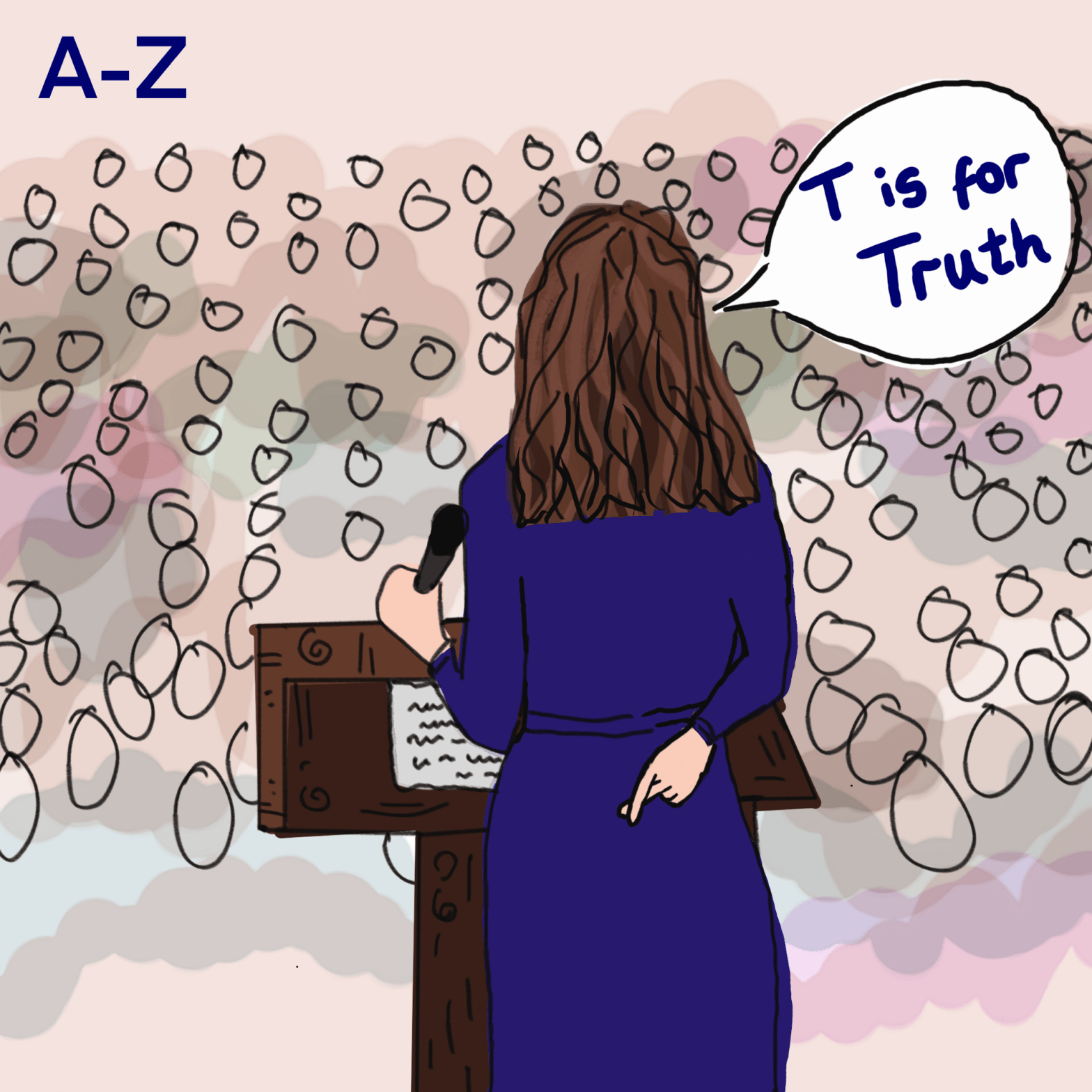
T is for Truth

The truth matters. Not only ‘speaking truth to power’, but turning that on its head to speak truth to the masses. The perversion of political debate and populist appeal is, put simply, dangerous and divisive. The corruption of social media by fantasists and fanatics – including those who own the channels or the algorithms which distort the debate – don’t just manipulate the truth, they lie. In some cases telling one “truth” to one group and the polar opposite “truth” to another in their echo chambers. Driven by greed, power and hate.

It’s no longer a question of freedom of speech vs censorship, or facts over opinions. It is extreme views forced into the mainstream promulgated by national politicians, fringe parties gaining ground, and a compliant if not complicit media – while editorials supporting their owners views has always been the case, now chasing headlines or clickbait in the Wild West of social media is the norm.

This matters to us all. As governments twist and turn in the wind of public opinion, deranged global leaders and world crises – the dangers of climate change, the horrors of war and genocide, world poverty and mass migration that this brings – truth matters most. Instead we are fed conspiracy theories as facts, warped views as mainstream, and downright lies that cost lives, millions of lives.

All this determines the way that we are governed, the taxes we pay, the lives we lead. Some may feel too distant from the sheer scale of the challenges, a distraction from their daily lives; something for others to worry about and deal with, it goes ‘above my head’ and there’s nothing I can do. Yet for many, far far too many, it is their daily reality. It is the racism, the misogyny, the division sown in our communities, the fear or hatred of others.

Telling the truth is not a matter of principle, it is an absolute for democracy. To bend the truth is not the same as bending the rules, to achieve a better end. Half truths are half the picture, with long term consequences. Populist politics that panders to the masses distract from the truth of the matter, offering easy answers to complex issues. It is to lie to us all. A deceit that serves none of us well, and ultimately harms those which it purports to protect.

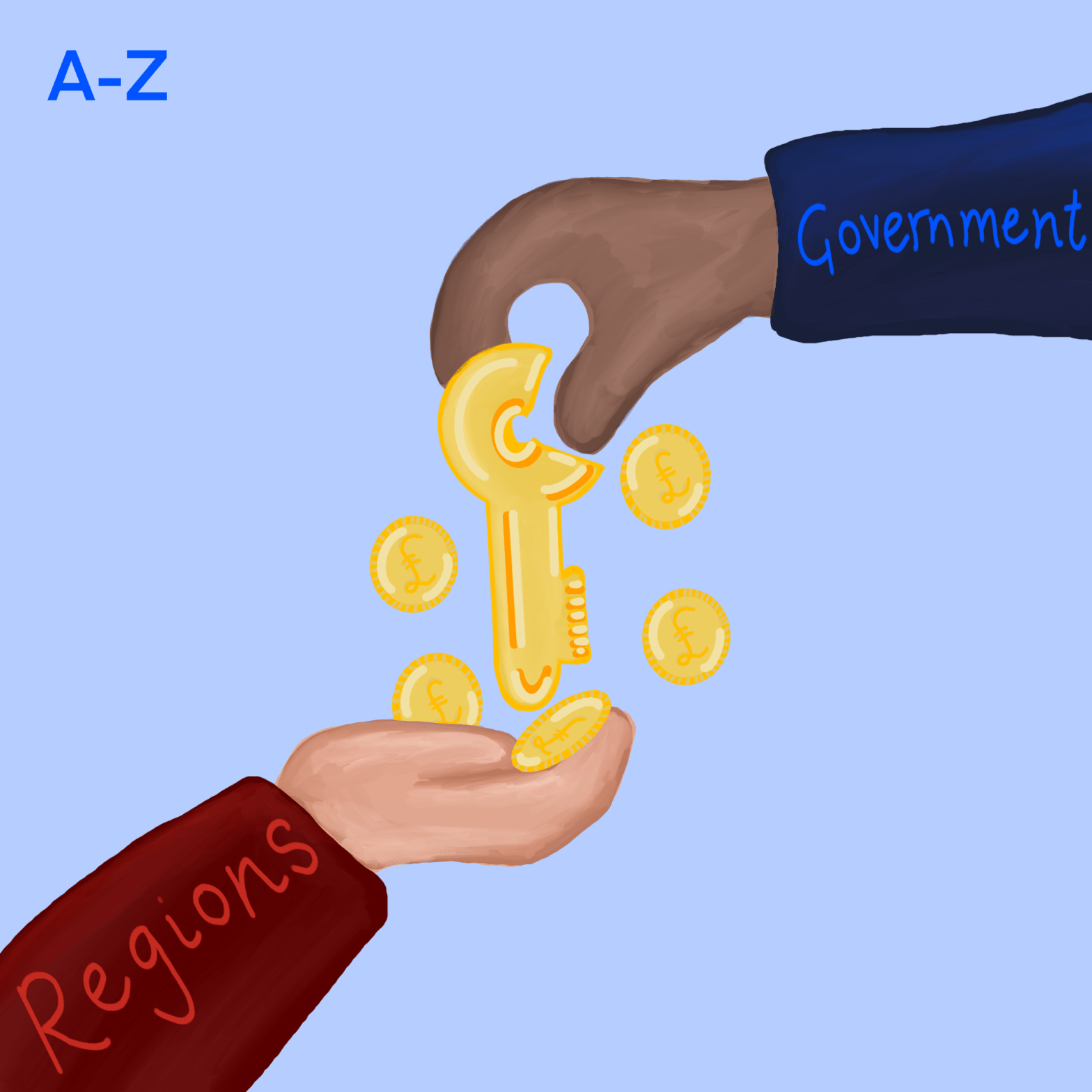
R is for Regions

What happens when you devolve powers to the English regions? More Mayors with increased responsibilities but less funding pushes problems away from Westminster and Whitehall. Yet a Government cannot afford to ‘let go’. It survives if people are better off, or at least feel better off, and are more confident about their futures. That is the sum of all parts of the country.

Therefore devolved powers must have clear lines of accountability and be properly resourced. While a Mayor can be held accountable by the electorate in their region, what is their accountability to Government and on the policies it was elected for the good of the nation as a whole?

This works both-ways. The Government is accountable to the regions’ electorate too, but often is seen as too distant and past experience has shown a willingness to write-off some regions (or indeed some UK devolved nations) in pursuit of votes or growth in other parts. Think the North-South divide.

When all the power is held centrally, too many decisions are made remotely from the communities they are meant to serve. Ministers set policies and budgets, Whitehall details policies and funding, drawing on data and focus groups and on occasion national consultations. Regional interests can be pursued but the national interest is overriding.

Westminster provides some checks and balances, determining legislation and scrutiny and public debate including MPs’ local and regional interests; but there’s little in the way of accountability between the regions. What’s established and works in some regions can be replicated in other areas or look very different: does difference matter? In some parts of the country there is a more clearly defined pride in their regional identity. This belies a patchwork of local identities and diverse communities within a region. Where does devolution stop?

Mayors are recognised as political champions ‘with clout’ to make things happen and an air of independence, not just as party stalwarts holding office and representing Government. We look to Mayors to empower localism in place based and neighbourhood-level approaches.

To that end the English Devolution and Community Empowerment Bill was published in July and is currently before Parliament. This lays claim that “deepening devolution across the country is what delivers the change to the day-to-day services and opportunities on every region’s doorstep.”

Prescriptive measures and narrow programmes dictated top-down from Government are counterproductive, a sugar-rush of funding at best. Rather it is the role of government to set clear outcomes and expectations for the population at large, within a framework of support and resources for public services where local areas can design, deliver and sustain services contextualised to their needs.

Regional mayors have convening powers at an appropriate scale for business and investment and population sizes. They oversee geographic areas and cultures that, if not always in harmony, are largely well established and connected. There’s often a shared history and everyday experiences between areas within a region over and above the nation state.

People want to see Mayors champion their cause and get things done often in spite of, if not supported by, the government of the day. To see the difference, closer to home, and feel the difference for themselves their families and neighbours.

Citadel is an associate of the Devo Agency, a network of specialists across the country to support UK growth and increase social mobility through the power of good devolution.

P is for Parties

It’s party time! Summer is here and we are celebrating 20 years of Citadel, founded in August 2005. Like any good party we’d like to invite our friends and family – our clients and partners – to join us and raise a glass, marking two decades of challenge and opportunities for those we work with and support. For many young people involved in our work, that’s (more than) a lifetime!

We’ve seen seismic shifts in world events, economic convulsions and a merry-go-round of politicians and political fortunes. From the last term of the New Labour government and the 2008 crash; the fixed term of the Coalition government and austerity; through the Conservative governments that brought in Brexit and saw us through the pandemic but ended without recovering from the chaos of the mini summit and cost of living crisis; and which ushered in a landslide Labour victory in 2024 buffeted by a US tariff war and heightened tensions of all out war in the Middle East, and the relentless wars in Ukraine and globally.

Despite the constancy of the UK party-system, it has been a roller coaster ride, each party taking on different and varied political shades over the years. This has seen the parties pivot and change course to dramatic effect, losing and gaining support in equal measure, often sowing the seeds of confusion and mistrust by their political manoeuvres. Shedding the New Labour legacy, moving on from One Nation Conservatives, divided across party lines on Brexit, and an apparent cult of personality of some party leaders but where larger than life characters were outlasted (indeed ousted!) by the parties they led. The fortunes of nationalist parties in the UK nations has fluctuated, and we’ve seen the steady rise in fringe parties becoming mainstream, albeit UKIP, the Brexit party and Reform are essentially the same political vehicle for a distinctive brand of personality politics and populism.

A key learning from all that we’ve achieved and the insights we’ve gained from others who we have worked with, is “do your homework”! Don’t assume all politicians are the same, they are not. Take time to see the issues through the lens of the political parties, rising above binary demands to recognise the complexities and competing demands on the government of the day. Engage politicians across party lines on shared interests and challenges to make the world a better place, and to improve life chances. Respect differences of opinion and courses of action, yet stand firm on your values and don’t give ground to the political opportunists, bigots and populists who play a different tune. Such individuals can be found in all political parties, as they are in communities and families. Some have ascended to the top of their parties, but many have been discarded or veered away from their party and political mainstream.

The constant news cycle, social media algorithms and stream of propaganda distracts, disrupts and corrupts political parties and the democracy we rely on. Holding parties to account for their policies and actions – in opposition as well as in government – is critical. Helping to shape and sustain policies over the longer term is vital for the young lives we support. Policies and parties come and go over 20 years past and future. Yet the needs of our communities and families, and the ambitions for our young people, is consistent and intergenerational.

We look back with pride and celebrate our work others in the last 20 years. We look to the future and how today’s young people will do more than survive, to thrive in 20 years time within a vibrant democracy and political parties, for connected communities and a close-knit society.

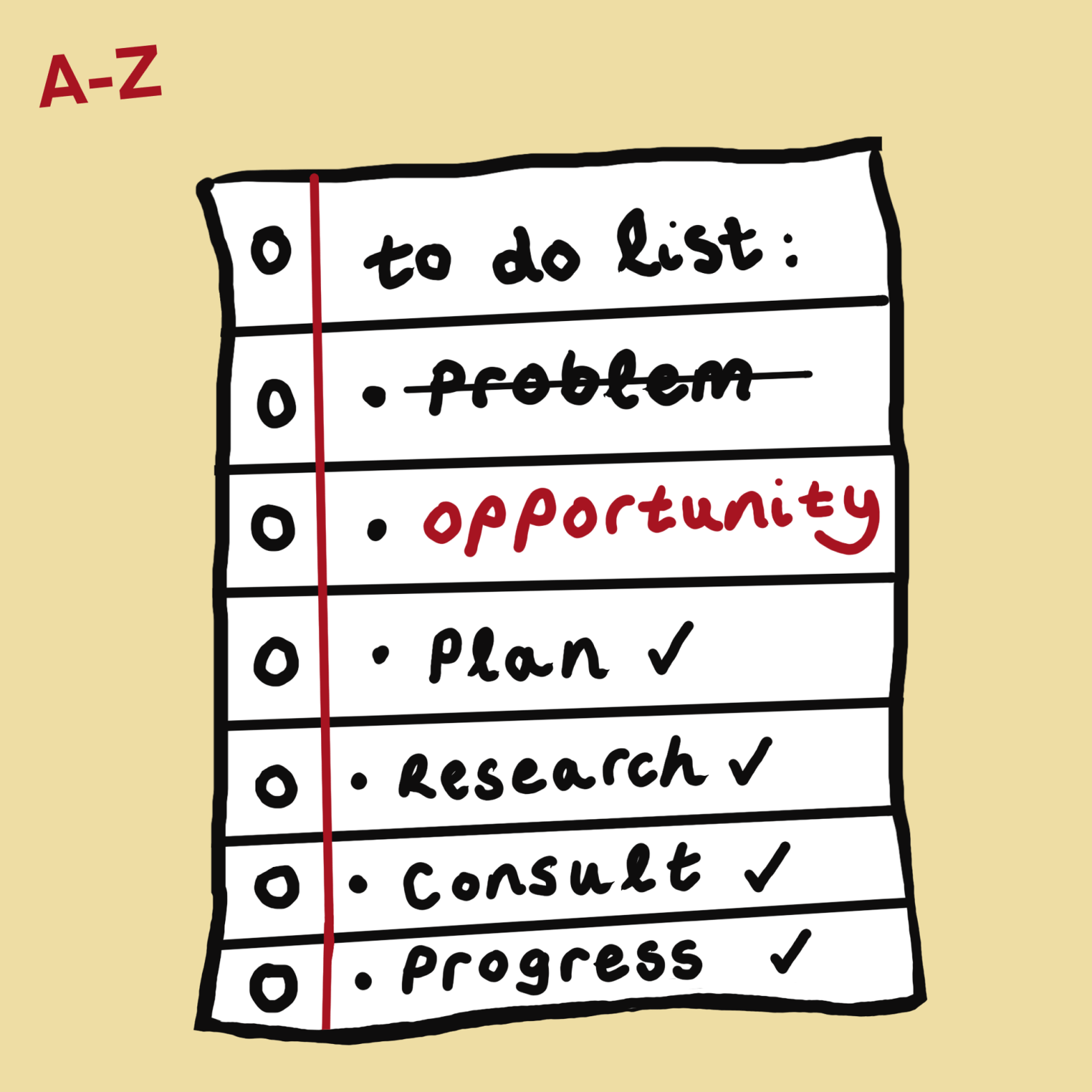
O is for Opportunity

Seize the moment! Better still, create the moment.

The Government’s stated mission is to break down barriers to opportunity. This is a critical plank of policies to tackle structural and systemic challenges of disadvantage, discrimination and marginalisation. A levelling playing field, just as the last government talked about levelling-up. This supports those presented with opportunities to take them. We need to go farther, faster, to create opportunities. Proactive to invest in skills, social networks and career pathways to secure opportunities for all.

After 20 years of working in support of young people and families, in education and employment, here’s what we’ve learned to influence change and create moments that affect change. Where we see challenge, the test is how we convert this to opportunity.

For commercial clients this has been about innovation, growing markets and benefits often measured in sales, but increasingly on solutions that deliver social returns and its brand values as seen through the eyes of its current and future customer base. For some it’s how they are perceived by politicians and influencers to shape a market and regulation.

Our work with charities and public services starts with the social value, but still considers the economic benefits or savings in other areas and over the longer term. There’s a more immediate return from projects and programmes to meet targets, whether that’s reduced youth violence or increased school attainment. However the longer term value can be intangible or missed, beyond the individual needs and opportunities, as we look towards the collective impact and connected communities which forge a closer-knit society and shared values. Our goal is a more equitable society of access to opportunity and the necessary skills and resources to make the difference.

Whether a commercial or social enterprise there’s a cost benefit and financial return but a greater value to the economy and society. In the same way, to be effective in public affairs is to create opportunities that have real value and are a catalyst for change. A vision or goal means little if it’s not rooted in evidence of what’s wanted or needed, but the facts alone are not enough to win over politicians faced by competing policies and priorities. It needs a clear narrative, the ability to tell the story of what is the challenge, where there’s a solution and the opportunity to act.

A public affairs campaign can respond to world events and promote a cause and fill a media void on any given day or week. However to build lasting relationships, long-term funding, and to provide answers to thorny problems requires planning, research, consultation and a clear proposition readily understood. To turn a challenge into an opportunity isn’t quick fix, but will be long-lasting.

Citadel works with Roundhouse, London for youth engagement, participation and enterprise through youth work, the arts and creative industries. Roundhouse Works is an opportunity centre for young creatives, nurturing talent and providing practical support to young people, new skills and experiences to create opportunities for themselves and others, opening up career pathways and improved life chances.

N is for Nation

A nation can be defined by its people, as a community and society of shared values and common cultures, and by its political standing as a sovereign state with its own borders, government and international recognition.

Who is to say what those shared values are? Cultures evolve over generations, if we are not to be trapped in the past, and through great economic, social and environmental developments. How do we contain a culture or determine what are British values, when buffeted by global events and borderless social media? We are left to ponder what is sovereignty, when it succumbs to global markets and so-called strong man politics that respect no boundaries.

Pooled sovereignty can strengthen a nation’s resources for shared interests and international cooperation. This is writ large in the climate change emergency and the threat to democracy from wars and wannabe dictators to avaricious tech bros. Yet this requires confidence in who we are, as a nation, and to agree what we share and hold dear in the common interest. This rises above the electoral cycle of individual governments and runs across generations. It informed by the politics of the day – as seen by Brexit – but can leap the intergenerational divide.

What shapes a close-knit society is a sense of belonging and connected communities. Communities make up a nation. Investing in our communities creates that sense of belonging and builds our national identity. This builds on our history, as a nation, but not a nostalgia that views the past through rose-tinted glasses or seems to turn the clock back to a bygone age.

Rather it must be relevant to and seen to be part of the experiences and values of the younger generation. A truly intergenerational understanding, whatever our differences. When young people have a sense of belonging, communities are stronger. Connected communities create a cohesive society, and national identity that circumvents populist entreaties and any form of nationalism which rides rough-shod over our international outlook and obligations.

This speaks to countries and continents, dominated by super powers of East and West with a revisionist and reductive view of history and national identity. It also speaks to us closer to home, with the nations that make up the UK, and an increasing trend for devolution to the English regions.
What unites us, more than our island borders that contain us? A raft of consultations, policies or laws and top-down decrees won’t give us the answer. Start with community, rebuild trust, restore hope for the future and confidence in who we are as a nation will follow. If we don’t start with young people, we will be locked in to a cycle of constantly looking over our shoulder to the populist sirens extolling the past and promulgating dreams for the future that sows division and discord today.

From our start and over the last 20 years Citadel has worked with and supported the National Youth Agency in England to protect and grow the youth and community workforce, putting youth voice and experiences at the heart of that work. Also creating the National Youth Sector Advisory Board, representing youth organisations with funders, regulators, commissioners and government behind a coherent strategy and advocacy for youth work with young people. NYA has more recently held the reins of UK Youth Parliament and led a consultation for the creation of a new National Youth Council for England, while connecting the equivalent bodies in the UK nations, Commonwealth and Europe.